(ProsperNews.net) – Trump’s decisive strike on Iran’s nuclear facilities bypasses Congress, reigniting a fierce constitutional battle over war powers that could reshape presidential authority for generations to come.
Key Takeaways
- President Trump ordered airstrikes on Iranian nuclear facilities without prior congressional approval, citing Article II powers
- The strikes have revived the decades-old debate about presidential war powers versus Congress’s constitutional authority to declare war
- Republican leadership strongly backed Trump’s decision as necessary for national security, while a bipartisan group of lawmakers had been working to limit presidential war powers
- Legal experts remain divided on whether the strikes exceeded constitutional boundaries, with supporters citing imminent threat doctrine
- The outcome of this constitutional showdown could set precedents for executive military action for future administrations
Constitutional Showdown Erupts After Trump’s Iran Strike
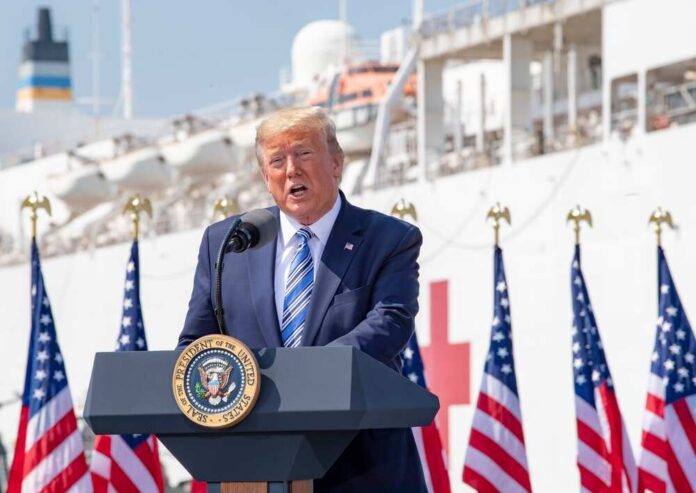
President Trump’s bold decision to order U.S. airstrikes against Iranian nuclear facilities on June 21, 2025, has ignited a firestorm of constitutional debate that cuts to the heart of America’s separation of powers. The strikes, executed without explicit congressional authorization, have drawn sharp criticism from constitutional purists while simultaneously garnering strong support from national security hawks. This decisive military action represents the most significant test of presidential war powers in recent memory, with implications that could reshape executive authority for decades to come.
The legal justification for the strikes rests primarily on Article II of the Constitution, which designates the president as Commander-in-Chief. John B. Bellinger III, a legal expert cited by the Council on Foreign Relations, explains that presidents have historically claimed broad constitutional authority to use military force without congressional authorization when acting in defense of national interests. This interpretation has been employed by administrations of both parties, though critics argue that targeting Iran’s nuclear program—absent an immediate attack on American assets—stretches these powers beyond their constitutional limits.
Republican Leadership Rallies Behind Trump’s Decision
The White House has assembled a strong coalition of Republican leaders who view the strikes as necessary and justified. Speaker Mike Johnson offered unequivocal support, declaring the action “necessary” given Iran’s nuclear ambitions and longstanding status as the world’s leading state sponsor of terrorism. The administration has emphasized that the operation was “limited and targeted,” designed specifically to neutralize facilities directly linked to Iran’s nuclear weapons program without triggering a broader regional conflict.
Senator John Barrasso reinforced this position with a stark assessment: “The greatest threat to the safety of the United States and the world is Iran with a nuclear weapon.” This sentiment reflects the widespread concern among conservatives that Iran’s nuclear program represents an existential threat to American security interests and those of our allies in the region, particularly Israel. The administration has framed the strikes as a preventative measure against an imminent threat, rather than an act of aggression or regime change.
Bipartisan Effort to Reassert Congressional War Powers
Even before the strikes occurred, a bipartisan coalition in Congress had been working to reassert legislative authority over military actions. Representatives Thomas Massie (R-Ky.) and Ro Khanna (D-Calif.) had introduced a War Powers Resolution requiring explicit congressional approval for U.S. entry into the Israel-Iran conflict. This effort reflects growing frustration among lawmakers from both parties about the decades-long erosion of Congress’s constitutional role in authorizing military engagements.
Senator Tim Kaine (D-Va.) had filed a similar measure in the Senate, emphasizing that “Congress must decide such matters according to our Constitution.” These resolutions faced significant hurdles in a divided Congress, but they highlight the persistent tension between executive and legislative branches regarding war powers. The fact that Trump proceeded with strikes despite these ongoing legislative efforts has only intensified calls for congressional oversight from constitutional conservatives and progressives alike.
National Security Experts Weigh Strategic Implications
Beyond the constitutional debate, national security analysts have offered mixed assessments of the strikes’ strategic value. Emily Harding of the Center for Strategic and International Studies (CSIS) suggests that while the operation was tactically successful, Iran’s leadership is historically cautious and calculating. This assessment implies that while immediate escalation might be limited, the long-term consequences remain unpredictable. The Biden administration had previously avoided direct strikes on Iranian soil, fearing broader regional conflict—a restraint Trump clearly rejected.
“The greatest threat to the safety of the United States and the world is Iran with a nuclear weapon,” stated Senator John Barrasso, reflecting the administration’s position that decisive action was required regardless of procedural concerns.
The strikes represent a significant departure from the cautious approach of previous administrations, which typically limited military actions against Iran to proxy forces or assets outside Iranian territory. Trump’s willingness to target facilities within Iran proper signals a fundamental shift in American strategic posture that has alarmed opponents while reassuring allies concerned about American resolve. The administration has emphasized that the operation was carefully calibrated to minimize civilian casualties while maximizing impact on Iran’s nuclear capabilities.
Constitutional Crisis or Necessary Action?
At its core, this controversy represents a fundamental disagreement about constitutional interpretation that has persisted throughout American history. Supporters of robust executive authority point to the practical impossibility of obtaining congressional approval for time-sensitive military operations. They argue that the Founders intentionally vested the president with significant latitude in national defense matters precisely because the executive branch can act with the speed and decisiveness that legislative bodies inherently lack.
Critics counter that the Constitution explicitly grants Congress the power to declare war, and that this authority has been systematically undermined by expansive interpretations of presidential power. They warn that allowing presidents to unilaterally order military strikes against sovereign nations—even those hostile to American interests—sets a dangerous precedent that concentrates too much power in a single individual. This tension between constitutional principles and national security imperatives remains unresolved, with each crisis adding new dimensions to the debate.
As the dust settles from these strikes, the American people are left with profound questions about the proper balance of power in our constitutional system. Whether Trump’s actions will be viewed as a necessary defense of national security or an overreach of executive authority may ultimately depend less on constitutional theory than on the practical outcomes of this high-stakes gambit. What remains clear is that the struggle between presidential power and congressional authority will continue to shape American foreign policy for generations to come.
Copyright 2025, ProsperNews.net