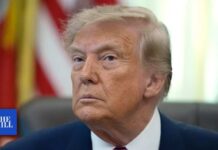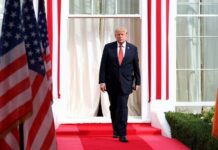

President Trump has asked the Supreme Court to let his mail-voting order move forward, even as lower courts keep blocking it.
Quick Take
- The Trump administration filed an emergency request with the Supreme Court on Monday.
- The dispute centers on a March 31 executive order on citizenship checks and mail ballots.
- Lower courts have already blocked key parts of the order in several cases.
- The fight is unfolding less than 100 days before the November midterm elections.
Supreme Court Fight Intensifies
The Trump administration asked the Supreme Court to intervene after a federal appeals court left a block in place on key parts of the order. The request came after a 2-1 ruling and pushed the issue into the highest court while the election calendar keeps moving. The administration is seeking emergency relief, which would let the order take effect while the broader case continues.
Court records and reporting show the order is not a small tweak. It directs federal agencies to create voter-eligibility lists and ties Postal Service ballot delivery to those lists. That makes the fight about more than one rule. It is now a test of whether the president can steer parts of election administration through executive action when states have long controlled most voting rules.
The Order’s Reach and the Legal Pushback
The executive order was signed on March 31 and carries the title Ensuring Citizenship Verification and Integrity in Federal Elections. Reporting says it aims to tighten mail-ballot rules, require federal agencies to build eligibility lists, and limit ballot delivery to voters on approved lists. Supporters present that as election integrity. Critics see it as a federal takeover of election rules that belong to states and Congress.
That split has already shown up in court. A Boston judge blocked enforcement of key parts of the order in June, while another judge later said the Postal Service had not yet finalized the rule needed to carry it out. A federal appeals court then upheld the block for the states that sued. Together, those rulings show a pattern: the administration keeps arguing urgency, but the courts keep finding the legal ground too weak or too unfinished.
Why the Timing Matters
The calendar makes the dispute sharper. The emergency filing came with the midterms only 99 days away, so any delay or change can shape how voters receive ballots. That is why the issue is politically loaded on both sides. Backers of the order say it protects election integrity. Opponents say it could confuse voters, slow ballot access, and create the kind of last-minute rules change that fuels distrust in government.
President Donald Trump asked the Supreme Court on Monday to allow the administration to move forward with implementing a sweeping executive order aimed at mail voting that lower courts blocked in nearly two dozen states — setting up a major elections dispute at the high court…
— rattanjournalist (@RattanNews) July 27, 2026
The deeper issue is familiar in modern election fights. Federal courts have repeatedly treated the core rules for voting and ballot handling as matters for states and Congress, not the presidency. This case now asks the Supreme Court to say whether that line still holds when a president tries to use federal agencies to reshape mail voting before a national election. The answer could affect not just this order, but future election fights as well.
Sources:
cbsnews.com, cnbc.com, washingtonpost.com, cnn.com, aclu.org, politico.com, youtube.com, nytimes.com, thehill.com, apnews.com, whitehouse.gov, npr.org, aclum.org, nextgov.com, brennancenter.org, bbc.com, issueone.org, bipartisanpolicy.org, naco.org, votingrightslab.org
© prospernews.net 2026. All rights reserved.