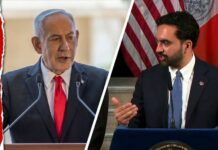

Fresh U.S. strikes on multiple targets in Iran raise a hard question: is this a short fight or a grinding campaign?
Story Snapshot
- U.S. Central Command confirmed new strikes on multiple targets in Iran, signaling continued operations [6].
- Initial waves hit air defense, control stations, and radar sites after a U.S. helicopter was downed near the Strait of Hormuz [9][3].
- Iran’s Revolutionary Guard claimed the Strait of Hormuz would be closed, heightening global energy risks [8].
- Vice President JD Vance’s “short war” framing now faces pressure from repeated strike cycles and stalled talks [15][19].
U.S. Says Operations Continue Against Multiple Iranian Targets
U.S. Central Command said forces began striking multiple targets inside Iran as tensions rose after earlier exchanges [6]. The command framed the action as a response to hostile acts and ongoing threats. The update made clear this was not a one-and-done shot, but part of continuing operations. That matters for readers asking how long this lasts and what victory looks like. When the military says operations are ongoing, it signals a campaign with steps, not a single reply.
The White House has said the goals are to deter attacks and push Iran toward a deal. President Donald Trump warned Iran would “pay the price” if it stalled talks, which hints at more strikes if needed [7]. Conservatives want firm action without endless war. Clear aims, a clean end state, and steady pressure fit that model. But the line between sharp deterrent blows and open-ended missions can blur fast when the other side keeps firing or posturing.
Initial Strikes Focused on Air Defenses and Surveillance
Reports described early U.S. strikes hitting air defense systems, ground control stations, and radar sites near the Strait of Hormuz [9][3]. Those targets suggest a limited military scope aimed at blinding and disarming threats close to U.S. forces. Such precision strikes reduce risk to our pilots and ships. They also avoid broad damage that can pull America into rebuilding or policing. This is the right way to project strength while keeping the mission narrow and tied to direct threats.
Analysts noted that Iranian missile activity dropped sharply in the opening phase of the conflict under heavy U.S. and Israeli pressure [5]. That trend backs the case for decisive, targeted blows that sap the enemy’s ability to strike. It also supports Vice President JD Vance’s claim that conflict need not be long if the enemy’s tools are degraded fast. Still, a drop in fire is not the same as a signed deal. It can buy time, but it does not end the fight on its own.
Iran Threatens Hormuz Closure, Raising Energy and Trade Risks
Iran’s Revolutionary Guard said the Strait of Hormuz would be closed to all vessels after U.S. strikes [8]. That threat matters. About a fifth of the world’s oil flows through that narrow waterway in normal times. A choke point there can raise fuel prices at home, strain family budgets, and slow the economy. Conservatives know high energy costs hit working families first. Keeping Hormuz open is not globalism; it is common sense for our own security and prosperity.
🇺🇸 The First Order Consequence:
US Central Command denied Iranian media reports that a US warship was targeted in the Strait of Hormuz, saying no U. S. warships had been struckThis reduces the immediate risk of a U. S. retaliatory escalation based on those specific claims, but… https://t.co/uEIR1d7TK5
— U.S.A.I. 🇺🇸 (@researchUSAI) June 10, 2026
Markets already reacted as oil extended its climb on word of new U.S. strikes and rising Hormuz tension [11]. That is a reminder that every raid carries a pocketbook effect. Smart pressure aims to protect sea lanes while punishing Tehran’s aggression. The United States can do both with naval escorts, mine countermeasures, and allied coordination. The balance is tough but vital: defend our people, keep trade moving, and deny Iran the ability to hold the world economy hostage.
Vance’s “Short War” Frame Meets The Reality Test
Vice President JD Vance argued earlier that any U.S. action should be limited in scope and duration. He later said America is “locked and loaded” if nuclear talks fail, outlining two paths: a deal or resumed military pressure [19]. Political opponents now claim the war is dragging past his “not long” line [15]. Their charge leans on the fact of successive U.S. strikes and no clear end date yet. That is a fair factual pressure test, not proof of failure, but it raises a real concern.
Conservatives judge results. The key test is not calendar days but mission clarity and cost. If U.S. Central Command keeps strikes limited to specific threats, if Iran’s reach stays suppressed, and if sea lanes stay open, then the plan aligns with Vance’s standard. If cycles expand without a path to closure, the mission risks drift. The administration can steady support by setting tight objectives, denying mission creep, and keeping Congress and the public updated on clear, measurable goals.
What Victory Looks Like And What To Watch Next
Victory looks like safe American troops, open shipping lanes, and Iran deterred from further attacks. That means sustained pressure on air defenses and surveillance nodes that threaten U.S. assets [9][3]. It also means pushing back on Hormuz threats through visible naval strength and coalition messaging [8]. Policy should avoid nation-building traps. Hit what threatens us, protect commerce, and then step back. That is the conservative way to use force: limited, lethal, and tied to American interests.
Watch for three signs. First, fewer Iranian launches and a longer pause between incidents would confirm deterrence gains [5]. Second, steady statements from U.S. Central Command that shift from “ongoing strikes” to “no current targets” would signal a plateau [6]. Third, any formal steps by Tehran to reopen Hormuz would show pressure works [8]. Until then, expect more precise raids and loud threats. Strength, clarity, and tight limits will keep this from turning into an open-ended grind.
🇺🇸 The First Order Consequence:
The US military conducted an Iran strike using 49 Tomahawk missiles overnight, which likely signals an escalation in kinetic activity and raises near-term risks of retaliatory strikes, air-defense engagements, and further regional instability as… https://t.co/5NkoJO2eie— U.S.A.I. 🇺🇸 (@researchUSAI) June 11, 2026
Sources:
[3] YouTube – US Strikes Iran After Trump Orders Retaliation Amid Rising Tensions …
[5] Web – Iran war latest: US begins fresh wave of strikes against multiple …
[6] Web – Who Is Winning the Iran War? – CSIS
[7] Web – U.S. military says it has begun striking ‘multiple targets’ in Iran in …
[8] Web – Trump threatens further strikes as US-Iran tensions spread across Gulf
[9] Web – Iran closes Strait of Hormuz after US strikes, escalating Gulf …
[11] Web – US Israel Iran War News Live Updates: US says it is striking targets …
[15] Web – 2026 Iran war | Explained, United States, Israel, Strait of … – …
[19] Web – US Vice President JD Vance said on Tuesday the United … – Instagram
© prospernews.net 2026. All rights reserved.