
When a federal regulator hints that a single TV programming decision could help decide whether a major network keeps its licenses, it hits the core fear many Americans share that powerful insiders are using government tools to punish speech they do not like.
Story Snapshot
- FCC Chair Brendan Carr says ABC’s refusal to air a Trump speech may count against its broadcast licenses.
- ABC and Disney say the early license review is unconstitutional retaliation and a threat to free speech.
- The fight centers on a vague “public interest” standard that both parties claim to defend.
- The clash feeds the belief that elites in government and media use their power to protect themselves, not the public.
What Brendan Carr Said About ABC and Trump’s Speech
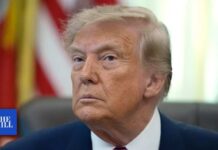
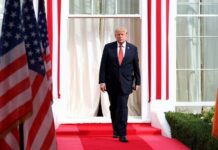
Federal Communications Commission (FCC) Chair Brendan Carr said ABC’s decision not to air President Trump’s July 16 speech on election security could be weighed in the agency’s early review of licenses for eight ABC-owned stations. Carr argued that when a president speaks from the White House on an “important speech,” broadcasters “should be carrying” it as part of their duty to serve the public interest. In a Fox News interview, he likewise warned that skipping a major presidential address may factor into license renewal decisions.
ABC and NBC did not show the speech on their traditional broadcast channels but did carry it on streaming platforms, which means they limited it to certain audiences rather than blocking it everywhere. Carr tied his concerns to a long-standing rule that broadcast license holders must “operate in the public interest” to keep using public airwaves. He also said any network, regardless of politics, could face questions if it refused a major presidential address, signaling a broader standard, at least in theory.
Why ABC Says the License Fight Is Retaliation
The FCC had already ordered Disney, ABC’s parent company, to file early license renewals for its eight owned stations, years before the licenses were due. ABC and those stations responded by calling the early review “unlawful, arbitrary and unconstitutional,” arguing the only reasonable explanation is punishment for views the government dislikes. Their filing says the order opens the door for an attack on their licenses while regulators search for a legal excuse, not a neutral review of service to local communities.
Disney and ABC point out that Carr first justified the early license renewal order by citing Disney’s diversity, equity, and inclusion policies, not Trump’s speech. They argue this shifting focus—first corporate policies, now an editorial choice about carrying a presidential address—shows the real issue is content that angers those in power. ABC is now casting itself as a defender of First Amendment rights, saying the case is about whether the government can use license threats to shape news and opinions.
The Deep Fight Over “Public Interest” and Media Power
The Communications Act gives the FCC power to review local station licenses and renew them only if the station serves “the public interest,” but the law does not give a clear, simple definition of what that means. Carr says this loose standard lets the commission make sure broadcasters are not running hoaxes or distorting news and that they are covering major national events fairly. He insists his moves are about enforcing long-standing rules, not censoring critics of President Trump.
FCC‘s Brendan Carr: ABC Speech Snub Factors Into License Review https://t.co/3AZG18ePJM via @BreitbartNews
— Jeff Robinson, CEO and Chairman of $MRES and $MMAZ (@contrariansmind) July 23, 2026
Critics, including public-interest groups and some lawmakers, say the same vague standard can become a weapon for whichever party is in power. They note that Carr has repeatedly raised the idea of pulling or questioning licenses over coverage of Trump, Iran war reporting, and late-night jokes, turning the FCC into what one commentator called “Trump’s journalism police.” That pattern makes many people on both the left and right worry that license threats are less about fairness and more about scaring anyone who challenges the ruling class.
Why This Matters to People Tired of Both Parties
For many conservatives, ABC’s refusal to air Trump’s comments on election security looks like more evidence that big media companies tilt against their concerns while still enjoying government-protected access to public airwaves. Carr’s message taps that anger by saying broadcasters enjoy a special privilege and owe citizens serious, even-handed coverage in return. His supporters see him using a rare tool—early license review—to finally hold a powerful network to account.
For many liberals and civil libertarians, the same facts look like an attempt by a president’s appointee to punish a critic, using federal power to reach into newsrooms and program schedules. Groups like Free Press call the early license move an “unconstitutional attack on free speech,” warning that if this tactic stands, any future administration could threaten licenses whenever coverage cuts against its interests. That fear echoes a broader frustration that the system lets elites in politics and media trade favors while ordinary people’s voices are squeezed out.
What Could Happen Next
The FCC’s review of the ABC-owned stations is still a process, not a verdict; no final order has found ABC violated any rule by skipping the Trump speech. Carr says “all options remain on the table,” which legally includes renewing the licenses, renewing with conditions, or starting steps that could one day lead to revocation. ABC has signaled it is ready to fight in court, setting up a clash that could test how far the government may go in tying content decisions to the right to keep broadcasting.
Whatever one thinks of Trump, Carr, or ABC, this battle goes to a simple question many Americans share: who really controls the flow of information in this country—big media companies, government regulators, or the citizens the system is supposed to serve? People across the spectrum see powerful players on both sides using rules and licenses as bargaining chips, while the promise of a fair, open public square drifts further out of reach.
Sources:
reason.com, deadline.com, reuters.com, cnn.com, forbes.com, cnbc.com, npr.org, theguardian.com, finance.yahoo.com, techfreedom.org
© prospernews.net 2026. All rights reserved.