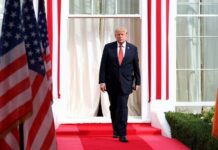

As the remains of six Americans killed in the Iran war returned home, a quiet ceremony at Dover Air Force Base turned into another window into how far many feel Washington has drifted from the ideals it claims to honor.
Story Snapshot
- President Trump attended a dignified transfer for six troops killed in an Iranian drone strike on a U.S. site in Kuwait.
- The solemn ritual at Dover Air Force Base highlighted the heavy cost of a war many Americans feel they never truly chose.
- Debates over Trump’s conduct at Dover reflect deeper anger on both left and right about politicized military sacrifice.
- The ceremony fits a larger pattern where presidents are judged not just for policy, but for how they honor the fallen.
What Happened At Dover Air Force Base
On Saturday, March 7, President Donald Trump traveled to Dover Air Force Base in Delaware to witness a **dignified transfer** of six U.S. service members killed in the opening days of the war with Iran. These troops died when an Iranian drone struck a U.S. command facility at Port Shuaiba in Kuwait, marking the first American deaths of the conflict. The Pentagon identified the fallen by name and confirmed they were killed in action supporting Operation Epic Fury, a joint U.S.–Israeli campaign against Iran.
During the ceremony, military personnel carried flag‑draped transfer cases from the aircraft to waiting vehicles as Trump, First Lady Melania Trump, Defense Secretary Pete Hegseth, and other leaders stood and saluted. Video coverage shows Trump on the tarmac observing each case as it passed, in line with the ritual that returns fallen troops to U.S. soil before their remains go to the base mortuary and then to their families. Commentators described this duty as one of the most somber and difficult tasks any commander in chief can face.
What A “Dignified Transfer” Means
A dignified transfer is the formal process the U.S. Armed Forces use to bring home the remains of service members who die overseas in the line of duty. The ritual is simple but heavy: a small team carries each flag‑covered case off the plane while family members and leaders watch in silence. The focus is on the fallen and their loved ones, not speeches or politics. The remains then move to mortuary affairs where they are prepared with care for burial, down to details like uniforms and personal effects.
Presidential attendance at Dover is rare enough that each visit becomes a national moment. Past presidents have made different choices. Barack Obama’s first trip in 2009 was framed as a break from distance, Joe Biden’s visits were linked to Afghanistan and later drone strikes, and Trump has attended a handful of transfers amid ongoing debate over his broader record on military matters. Each visit sparks arguments over not only the war itself, but how the president shows respect for those who died carrying out policies many citizens question.
Why This Ceremony Struck A Nerve
Many Americans now see events like the Dover transfer through the lens of a system they believe no longer serves ordinary people. The Iran war grew out of choices made far from everyday life, yet it is working‑class troops and their families who pay the highest price. For conservatives tired of decades of foreign entanglements, the sight of more coffins after trillions spent overseas reinforces the feeling that “America First” has not yet reached the Pentagon. For liberals worried about human rights and endless war, the strike in Kuwait looks like another example of lives lost in a conflict with no clear end.
The debate around Trump’s Dover visit did not question whether the ceremony happened or whether he attended; those facts are well established by multiple outlets and video. Instead, critics focused on what they saw as breaches of etiquette at other transfers and online use of images, while supporters stressed that he showed up in person to honor the fallen. That split echoes a deeper frustration on both sides: many feel leaders stage solemn rituals for the cameras while failing to change the policies that keep sending Americans into harm’s way.
Presidents, Optics, And The Deep State Concern
Analysts note that dignified transfers have become a kind of test of presidential character, with every gesture picked apart in real time. Supporters see attendance as proof that the president “cares about the troops,” while critics see missteps as signs of disrespect or political theater. Yet the larger question many citizens ask today is not just whether a president saluted correctly, but why the country keeps entering conflicts that create these ceremonies in the first place. That goes to the heart of anger about an unaccountable elite steering foreign and defense policy.
Photos: President Trump attends dignified transfer at Dover. See photos https://t.co/frXGNiTQeh
— Florida Times-Union (@jaxdotcom) July 22, 2026
When Trump stands on the Dover tarmac, he represents a government that both conservatives and liberals increasingly view as distant, self‑protective, and slow to admit mistakes. The Iran war’s first casualties are not just a military tragedy; they are also a reminder of how decisions made in Washington, Pentagon war rooms, and global alliances can reshape local lives in Iowa, New York, Texas, and beyond. For readers across the spectrum, the dignified transfer is a moment to honor the dead—and to ask hard questions about how and why they died.
Sources:
cbsnews.com, youtube.com, theguardian.com, abcnews.com, bbc.com, pbs.org, reddit.com
© prospernews.net 2026. All rights reserved.