

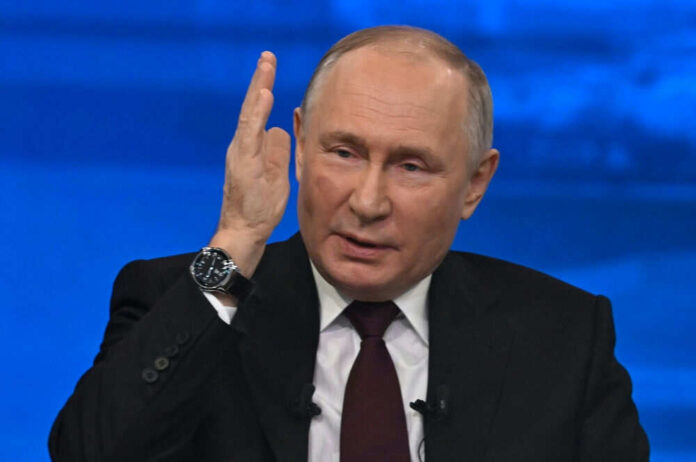
(ProsperNews.net) – As Vladimir Putin personally commanded Russia’s nuclear triad in a show of force that mirrored NATO’s own atomic drills, the world glimpsed how twenty-first-century nuclear brinkmanship looks when two superpowers synchronize their signals, raising the question: is this deterrence, or an audition for disaster?
Story Snapshot
- Putin supervised a full-spectrum nuclear drill as NATO ran its own deterrence exercise.
- Russia’s land, sea, and air nuclear forces launched missiles under direct presidential command.
- Both Russia and NATO framed their actions as routine, but the timing amplifies strategic signaling.
- Analysts warn of escalatory risks, heightened tensions, and the erosion of trust between nuclear powers.
Putin’s Command Performance: Russia’s Nuclear Triad on Display
Vladimir Putin took center stage on October 22, 2025, not in a Kremlin meeting room, but at the nerve center of Russia’s nuclear command. The Russian President did more than watch, he orchestrated a comprehensive readiness test involving intercontinental ballistic missiles, submarine-launched missiles, and strategic bombers. The Russian Ministry of Defense and top generals, including General Valery Gerasimov, executed the drill under Putin’s gaze, launching Yars ICBMs from land, Sineva missiles from submarines, and cruise missiles from the air. Such direct supervision by a head of state is rare and signals the supreme importance Russia places on its nuclear deterrent. This was not a tabletop exercise; it was a meticulously staged message to allies, adversaries, and a domestic audience conditioned to equate national security with nuclear prowess.
The drill’s choreography coincided, almost to the hour, with NATO’s own “Steadfast Noon” nuclear exercise, an annual event featuring U.S. B-52s and allied F-35As practicing nuclear delivery. Both sides insist on the routine nature of their maneuvers, but the symmetry is no accident. The parallel timing amplifies the stakes, each move scrutinized by military analysts and intelligence agencies, each launch interpreted as both a warning and a reassurance. While the Kremlin described its exercise as planned in advance, Western observers saw deliberate signaling, a calculated reminder that Russia’s nuclear arsenal remains at the ready, command structures intact, and escalation risks very real.
Strategic Signaling or Escalation: The Real Message Behind the Missiles
Russia’s decision to showcase its nuclear triad during NATO’s own deterrence drill is not a new tactic. During the Cold War, such “mirror exercises” were standard practice, each side measuring the other’s resolve and operational discipline. But the post-2014 security environment has sharpened these rituals. With tensions simmering over Ukraine and broader Euro-Atlantic disputes, both Russia and NATO have increased the frequency and visibility of their nuclear exercises. The stakes are higher, the mistrust deeper, and the channels for direct communication more fragile. Experts point out that full triad participation, land, sea, and air, demonstrates not only technical capability but also the resilience of Russia’s command-and-control systems. For Putin, the exercise reinforces his image as the ultimate guarantor of Russia’s security, projecting confidence to both domestic and foreign audiences.
Western analysts, however, see danger in the choreography. The risk is not that a missile will be launched in anger, but that parallel drills, mutual suspicion, and ambiguous messaging might lead to miscalculation. In an era where minutes matter, a misread signal or technical malfunction could spiral into crisis. Military experts stress the importance of robust communication channels and transparency, yet both sides have retreated from arms control dialogues that, in previous decades, helped manage such risks. The result is a security environment where signaling is louder, but understanding is thinner, and the margin for error is slim.
The Fallout: Tensions, Escalation, and the Future of Deterrence
The immediate effects of these parallel exercises are already visible. Intelligence agencies in Moscow, Brussels, and Washington are on heightened alert, dissecting telemetry, tracking bomber flights, and parsing official statements for clues. Political leaders face renewed pressure to invest in defense and modernize arsenals, while the public, especially those old enough to remember Cold War drills, watches headlines with a mix of anxiety and resignation. Markets, ever sensitive to geopolitical risk, respond with volatility. The broader impact, though, is subtler: trust between Russia and NATO erodes further, arms control frameworks wither, and the logic of deterrence becomes more brittle as each side prepares for the possibility, however remote, of nuclear conflict.
Experts emphasize that the true test is not in the technical success of a missile launch but in the ability of leaders to manage escalation and avoid miscalculation. Some scholars call for renewed arms control dialogue and confidence-building measures, arguing that even routine exercises can be misinterpreted in times of high tension. Russian sources insist the drills are purely defensive, while Western voices warn that such displays, however routine, can be provocative and destabilizing. The world watches, hoping that this choreography of deterrence remains theater, and never becomes tragedy.
Copyright 2025, ProsperNews.net