
(ProsperNews.net) – A single unscripted comment from Italian Prime Minister Giorgia Meloni, whispered to Donald Trump amidst a sea of global powerbrokers, exposed more about the fragile bond between leaders and the press than any official statement ever could.
Story Snapshot
- Meloni, at a White House summit, confided to Trump that she “never wants to speak with [her] press”
- The remark, caught on camera, contrasted Meloni’s media aversion with Trump’s combative openness
- The confession surfaced during critical negotiations over Ukraine’s future and Western security guarantees
- Her admission sparked fierce debate about transparency, press freedom, and political authenticity
One Offhand Remark, and the World Listens
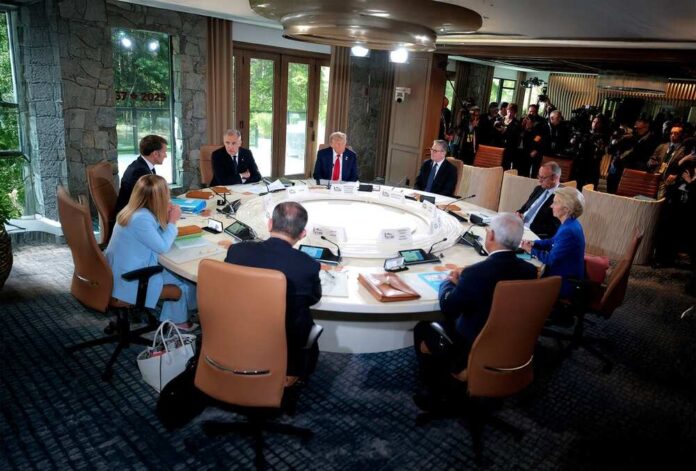
Reporters shuffled out of the White House’s Roosevelt Room, the last echoes of their cameras fading, when Italian Prime Minister Giorgia Meloni leaned toward Donald Trump and, with the candor of someone forgetting the microphones, confessed, “I never want to speak with my press.” A strange admission, especially as she sat surrounded by world leaders, each one under their own relentless spotlight. What made the moment so arresting wasn’t just Meloni’s discomfort or even the contrast to Trump’s famously combative relationship with journalists. It was the rare, unscripted glimpse into how power and the press collide behind closed doors, a collision that, for once, left a mark on the summit itself.
The August 18, 2025, meeting had already stacked the odds for drama. Trump, fresh from a headline-grabbing sit-down with Vladimir Putin in Alaska, hosted Ukraine’s President Zelenskyy, UK Prime Minister Sir Keir Starmer, and a roster of European allies at the White House. The agenda: find a path out of the Ukraine war’s grinding stalemate. The subtext: project Western unity, isolate Russia, and, perhaps, restore faith that diplomacy could still move the needle. With every participant under scrutiny, Meloni’s comment fell like a dropped glass, fragile, revealing, and impossible to ignore.
Pressures Mount as Diplomacy Plays Out
Meloni’s aversion to her own press corps did not arise in a vacuum. Her tenure as Italy’s Prime Minister has been marked by a stormy relationship with journalists at home, who often challenge her conservative policies and probe for inconsistencies. On the world stage, such discomfort becomes magnified. Trump, by contrast, has built a career on media confrontation, welcoming the brawl, framing himself as both victim and victor. The unscripted aside, therefore, drew a sharp line between two philosophies: retreat from scrutiny versus embrace of the spectacle.
The confession gained momentum precisely because it was unscripted. Intended for no one but Trump, it instead became a talking point across Europe and the United States. Analysts were quick to dissect its implications. Was Meloni signaling a broader mistrust of the press, a sentiment increasingly common among conservative leaders in Europe and America? Or was it simply a moment of exhaustion, the product of relentless political pressures and a high-stakes summit where every word could trigger headlines?
Diplomacy, Unity, and the Role of the Media
Events surrounding the summit underscored how much rides on both public perception and private candor. Trump’s promise of “very good protection” for Ukraine made headlines but left crucial specifics dangling. European leaders, including Meloni, pressed for concrete security guarantees and a credible path to ceasefire. For Ukraine’s President Zelenskyy, Western unity, however fragile, remained the only shield against a renewed Russian offensive. The presence of UK Prime Minister Starmer, Finnish President Stubb, and NATO Secretary General Rutte signaled that, despite internal differences, the West would not be divided easily.
Yet Meloni’s remark also reignited debate about transparency and accountability. Critics, especially in Italy, charged that such attitudes toward the press threaten democratic norms and undermine public trust. Supporters countered that relentless media scrutiny can stifle real leadership, especially during moments of crisis. The truth likely lies somewhere in between: the press functions as both a check on power and a source of perpetual discomfort for those who wield it.
Aftershocks and Questions That Linger
The fallout from Meloni’s confession continues to ripple across Europe and beyond. In the days following the summit, Italian media questioned her commitment to openness, while political allies scrambled to frame her remarks as an understandable, if awkward, reaction to intense public pressure. In Washington, attention remained fixed on whether Trump’s overtures to Putin and Zelenskyy would yield a breakthrough, or dissolve into more of the same diplomatic theater.
For the global audience, the deeper question endures: how much candor do we want from leaders, and at what cost? Meloni’s moment of honesty may ultimately be remembered less for what it said about her, and more for what it revealed about the persistent tension between statesmanship and the relentless, often unforgiving attention of the press. As the Ukraine peace process lurches forward, one thing is certain: the world is still listening, sometimes most intently when leaders think no one is.
Copyright 2025, ProsperNews.net