
(ProsperNews.net) – Los Angeles Mayor Karen Bass scaled back the downtown curfew on June 17, 2025, marking a turning point in the week-long standoff between anti-ICE protesters and federal forces that has become a flashpoint in the national immigration debate.
Key Takeaways
- Mayor Bass reduced curfew restrictions as protests showed signs of easing, scaling back from the original 8 PM to 6 AM timeframe
- President Trump deployed 4,000 National Guard troops and 700 Marines without California Governor Gavin Newsom’s consent, creating a state-federal power struggle
- The unrest began June 6 after ICE conducted raids arresting over 100 individuals, with demonstrations escalating into clashes with police
- Mayor Bass and Governor Newsom have strongly opposed the federal military response, calling it an overreach and “breach of sovereignty”
Curfew Scaled Back as Tensions Begin to Ease
After a week of intense confrontations between protesters and law enforcement in downtown Los Angeles, Mayor Karen Bass announced a scaling back of the citywide curfew on June 17. The curfew, which had originally been imposed on June 10 following escalating violence, had restricted movement in the downtown area from 8 PM to 6 AM nightly. The adjustment came as demonstrations against Immigration and Customs Enforcement (ICE) raids showed signs of de-escalation, though specific new hours weren’t detailed in available reports.
The original curfew had established a restricted zone bounded by major freeways surrounding downtown Los Angeles, with exemptions for residents, workers, emergency personnel, and those seeking medical care. Individuals exempt from the curfew were required to carry documentation proving their status. The loosening of restrictions signals that city officials believe the most volatile period of unrest may be passing, though authorities continue to monitor the situation closely.
Federal Overreach or Necessary Intervention?
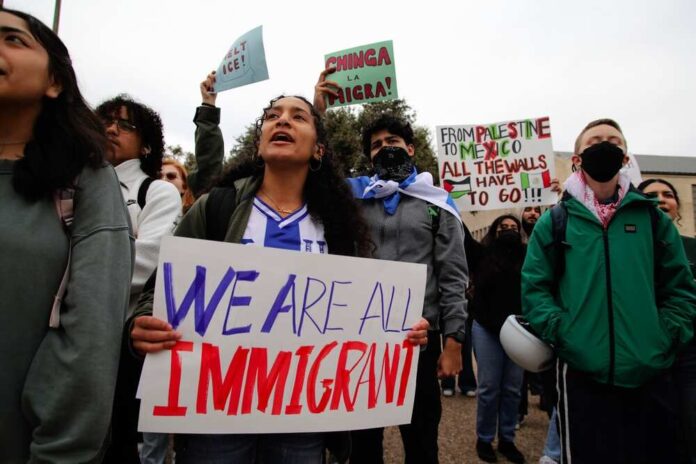
The protests that prompted the curfew began on June 6 after ICE conducted unannounced raids targeting undocumented workers at locations including Home Depot parking lots and garment district businesses. What started as peaceful demonstrations quickly escalated into clashes with police, property damage, and looting, creating a crisis that drew national attention and prompted President Trump to take dramatic action without consulting state officials.
In a move that has intensified the already heated national immigration debate, President Trump deployed 4,000 National Guard troops and 700 Marines to Los Angeles without California Governor Gavin Newsom’s consent. This federal intervention has created a bitter power struggle between state and federal authorities, with Newsom and Bass both condemning what they view as federal overreach.
“I have no idea what the Marines are going to do here,” Mayor Bass stated, highlighting the lack of coordination between local and federal authorities in addressing the unrest.
Protests Rooted in Controversial Immigration Enforcement
The demonstrations that have rocked Los Angeles for over a week were sparked by aggressive immigration enforcement actions that resulted in more than 100 arrests. Critics argue that these raids targeted vulnerable communities and separated families, while supporters maintain they are necessary enforcement of existing immigration laws. The protests quickly grew beyond their initial scope, drawing thousands of participants and counter-protesters to downtown Los Angeles.
President Trump has doubled down on his administration’s approach, renewing calls for expanded deportations specifically targeting Democratic-led cities. This targeted enforcement strategy has further inflamed tensions between federal authorities and local officials who have established sanctuary policies limiting cooperation with ICE.
Political Fallout Continues
The conflict in Los Angeles has become emblematic of the broader national debate over immigration policy, federal authority, and states’ rights. Governor Newsom has characterized the federal deployment as a “breach of sovereignty,” setting up a constitutional showdown that may ultimately be decided in the courts. Meanwhile, Mayor Bass has attempted to balance maintaining public safety with respecting the rights of protesters and immigrant communities.
Local business owners and residents have been caught in the middle of this political storm, with many reporting significant economic impacts from both the protests and the curfew. The downtown area, which had been experiencing economic revitalization before the unrest, now faces uncertainty as authorities work to restore normalcy while addressing the underlying issues that sparked the demonstrations.
Path Forward Remains Uncertain
While the scaling back of curfew restrictions represents a positive development, the fundamental conflicts driving the protests remain unresolved. Immigration advocates continue to call for reform of enforcement practices, while federal authorities show no signs of changing course on deportation policies. The presence of federal troops in Los Angeles without state consent creates an ongoing constitutional question that may have far-reaching implications.
As the situation evolves, residents are urged to stay informed about changes to curfew regulations and other emergency measures. City officials have emphasized that they will continue to adjust their response based on conditions on the ground, potentially reimposing stricter measures if demonstrations intensify again. For now, Los Angeles remains a city on edge, caught between federal immigration enforcement priorities and state sovereignty.
Copyright 2025, ProsperNews.net