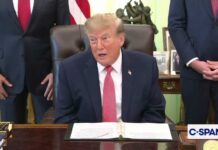
Trump’s Hormuz plan could turn a basic freedom-of-navigation mission into a paid toll road backed by U.S. warships.
Quick Take
- The Trump administration is discussing a fee for expedited escorted passage through the Strait of Hormuz.[1]
- Officials have also tied the escort idea to political risk insurance for maritime trade.[1][2]
- Reports say the Navy has not yet begun full escort operations, and officials say the force is not ready.[5][6]
- The plan is meant to keep oil moving, but it also raises hard questions about cost, risk, and scale.[2][5]
How the Hormuz plan works
Politico reports that administration officials discussed letting shipowners pay for faster passage through Hormuz, with U.S. naval escort as part of the package.[1] That idea goes beyond a simple military protection mission. It mixes security, insurance, and market pressure into one policy. Supporters may call it practical. Critics may see it as another sign that Washington is trying to manage a global chokepoint with a half-commercial, half-military fix.
The same reporting says the administration also explored using the Defense Production Act to push U.S.-based insurers to cover vessels in the strait.[1] Separately, the President said the United States Development Finance Corporation should provide political risk insurance and guarantees for maritime trade in the Gulf.[2][7] Taken together, the plan aims to lower shipping costs and pull tankers back into the water. It also shows how much fear, not just force, now shapes the market.
Military readiness remains the big obstacle
Coverage from CBS News says the White House has talked about escorts, but officials have also said they are not ready to start them yet.[5][6] Energy Secretary Christopher Wright said escorts could happen “relatively soon,” but “it can’t happen now,” while Treasury Secretary Scott Bessent said they would begin as soon as it is militarily possible.[5][6] That is a major warning sign for any plan that depends on quick action. A pledge is not the same as a deployed operation.
CBS News also described the mission as a two-phase effort. First, the military would need to reduce threats that could hit ships. Only then could escorts begin on a wider scale.[5][6] That matters because the Strait of Hormuz is narrow, crowded, and dangerous even in calmer times. If the Navy is still in the preparatory stage, then the administration’s public promise is running ahead of the battlefield reality. That gap can shake confidence fast.
What this means for shipping and policy
For conservative readers, the key issue is simple: government should protect commerce without creating another bloated, hard-to-judge scheme. If the United States is going to guard a major energy route, the public deserves clear rules, clear costs, and a clear mission. Politico’s report suggests the administration is still searching for a way to get more ships through the strait, but few companies have stepped up so far.[1] That raises a basic common-sense question about demand.
Latest News:
⚪ Trump administration mulls paid naval escorts through Strait of Hormuz
⚪ Yum Brands sells Pizza Hut for $2.7B, refocusing on Taco Bell and KFC
🟢 Trump Invokes Defense Production Act Amid Iran Conflict Weapons Shortages
⚪ Nvidia's Huang Calls for New Social… pic.twitter.com/8ddcY5Gsgq— Lumida Invest (@LumidaEarnings) June 17, 2026
The plan also shows how fragile the global energy system remains when a single waterway can rattle markets and drive emergency policy.[2][5] Trump’s public promise was meant to reassure shippers and protect energy flow.[2][7] Yet the reports also show a force that is still preparing, not fully operating.[5][6] Until that changes, the Hormuz idea looks less like a finished strategy and more like a high-stakes work in progress.
Sources:
[1] Web – Trump Administration Mulls Charging Fees for Naval Escort Through …
[2] Web – ‘VIP pass’: Trump administration mulling how to coax more oil tankers …
[5] Web – Trump administration has vowed to escort oil tankers through Strait …
[6] Web – ‘Free flow of energy’: Donald Trump orders US Navy to escort …
[7] YouTube – Trump Offers US Navy Escort for Tankers Through Strait of Hormuz Amid …
© prospernews.net 2026. All rights reserved.