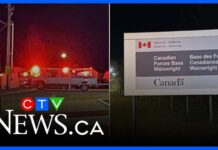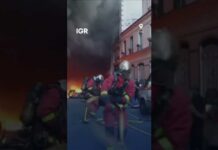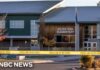

Canada confirmed four soldiers died and dozens were badly hurt after a fast-moving fire during military training at CFB Wainwright.
Story Highlights
- Prime Minister Mark Carney said four service members died and dozens were injured after the base fire.
- Officials said next of kin were notified before the public announcement.
- Investigators from the Canadian Forces National Investigation Service and the Royal Canadian Mounted Police are leading the probe.
- News reports identified the four fallen soldiers and their unit; flags were ordered to half-staff.
Confirmed Losses And Immediate Response
Prime Minister Mark Carney said four service members died and that dozens more were seriously injured after a fast-spreading fire at Canadian Forces Base Wainwright in Alberta. He said families of the dead were notified before the public update. He called the nation to mourn and pledged federal support for the response. Local hospitals received many patients, and reporters described urgent treatment for severe burns and smoke injuries during the surge of arrivals.
Associated Press reporting named the four fallen as Sgt. Morgan Wong, Pte. Shaun Farrell, Pte. Aidan Goulding, and Pte. Hayden Lykkemark. All served with the 3rd Battalion, Princess Patricia’s Canadian Light Infantry. The outlet reported thirty-nine people were injured, including nineteen critically. Carney ordered federal flags lowered to half-staff. Reporters described this as one of Canada’s worst peacetime military tragedies on domestic soil in recent memory.
What Officials Say About The Fire And The Investigation
Carney said the cause of the fire is not yet known. He said the Canadian Forces National Investigation Service will lead a full inquiry, with support from the Royal Canadian Mounted Police. Officials said the probe will focus on how the fire started, how changing winds drove its spread, and how safety steps worked under stress. Reporters said live-fire or combat training was underway when conditions shifted and the blaze raced across dry ground.
Canadian Broadcasting Corporation reports said the government emphasized facts first and avoided guessing about blame. Leaders said families will get updates as investigators gather records, witness accounts, and fire scene data. They also said the military would review training safety and communications. That approach mirrors past responses after major training accidents, which start with casualty confirmation and condolences, then move to causes and lessons.
Why This Matters Beyond The Base
A deadly training fire raises hard questions that cut across politics. People want the military to train hard and stay ready. They also want leaders to manage risk, share facts fast, and fix what failed. The sequence Canada follows here will shape trust. A complete probe, clear numbers, and public findings can help prevent the drift into rumor. A vague or slow process would fuel anger and doubt about accountability in Ottawa and in the chain of command.
Canada has faced this pattern before. Investigations after past accidents have used formal inquiries to compel evidence and make safety changes. The army is expected to use a board of inquiry tool that can gather documents, test procedures, and recommend fixes for training ranges and emergency response. Those steps can reveal whether warnings were missed and whether staffing, gear, or weather planning fell short on the day of the fire.
What We Know, And What Comes Next
Reports agree on the core facts: four soldiers died, dozens were injured, and next of kin were notified before the announcement. News outlets identify the fallen and their unit, and they describe a fast-moving blaze during training. Carney ordered flags to half-staff, and investigators from the military and the national police are leading the case. Officials have not released a final cause, and casualty totals may update as patients recover or new data arrives.
Prime Minister Mark Carney said Canada is "united in grief" for the victims of the CFB Wainwright fire. https://t.co/2fntDpAzs5
— Globalnews.ca (@globalnews) October 19, 2026
People across the political spectrum often worry that governments hide the ball when disaster strikes. This response will be judged on candor, speed, and fixes. Leaders must publish the timeline, the range safety plan, the weather calls, and the emergency response actions. They must also support the wounded, the families, and the unit. If done right, the country can honor the fallen and make training safer without blunting readiness for the threats Canada faces.
Sources:
youtube.com, cbc.ca, richmond-news.com
© prospernews.net 2026. All rights reserved.