
(ProsperNews.net) – A late‑night Truth Social barrage from President Trump has once again exposed how legacy media weaponizes “health” narratives to undermine a conservative agenda voters overwhelmingly chose in 2024.
Story Highlights
- President Trump fired off roughly 10 late‑night Truth Social posts after a 90‑minute Pennsylvania rally focused on affordability.
- The New York Times escalated its series questioning his age and stamina, prompting Trump to denounce their coverage as “seditious” and “perhaps even treasonous.”
- Trump highlighted multiple cognitive exams and Walter Reed checkups, arguing critics ignore documented medical evidence.
- The clash underscores a deeper struggle over who defines presidential “fitness” after years of media protection for Biden’s obvious decline.
Trump’s Post‑Rally Truth Social Barrage Targets Media Narratives
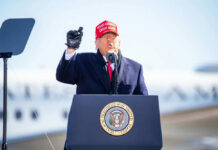
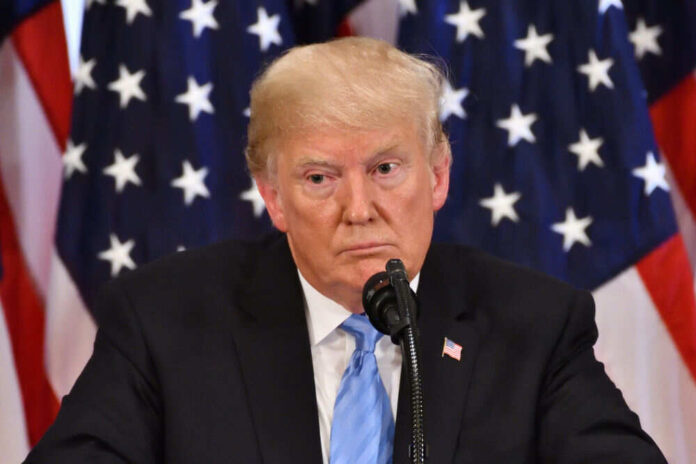
On the night of December 9, after delivering a roughly ninety‑minute, campaign‑style speech in Pennsylvania centered on affordability and the economic squeeze facing working families, President Trump returned to Washington and turned to his favored direct‑to‑voter platform: Truth Social. In a late‑night binge of about ten posts, the centerpiece was a nearly five‑hundred‑word message tearing into legacy outlets, especially the New York Times, for what he framed as dishonest hit pieces on his age, health, and daily schedule.
Trump’s post leaned heavily into a theme that resonates with many conservatives: the belief that corporate media does not simply report on Republican presidents, but actively works to delegitimize them. He insisted he is in excellent health, recounted lengthy evaluations at Walter Reed, and reminded supporters that he has taken multiple cognitive exams. He portrayed the latest coverage as a recycled playbook, similar to how those same outlets downplayed Joe Biden’s obvious decline while now magnifying every yawn or shorter day in his second term.
New York Times Health Series Fuels Renewed Age Debate
The eruption did not come out of nowhere. For weeks, the New York Times had been rolling out a series of pieces portraying Trump as slowing down: shorter public days, fewer events, and even a video segment claiming he appeared to fight off sleep during a Cabinet meeting. An opinion column went further, tying this supposed decline in vigor to softening approval ratings, explicitly comparing him to the Biden many Americans watched stumble through debates and scripted appearances before finally exiting the stage.
For readers who watched Biden’s allies and media surrogates dismiss concerns about his capacity as “right‑wing smears” until the collapse became undeniable, this sudden concern about age under Trump looks less like neutral journalism and more like selective scrutiny. The Times defends its reporting as heavily sourced and says Americans deserve in‑depth health coverage of their leaders. Trump’s supporters counter that this standard was never applied consistently, and that the same outlets now demanding more medical detail long shielded clear warning signs in the previous administration.
Trump’s Cognitive Tests And Claims Of ‘Perfect’ Health
In his late‑night post, Trump again leaned on an argument familiar from his first term: cognitive testing as proof of mental sharpness. He said he has taken three such exams and “aced” all of them in front of teams of doctors and experts at Walter Reed, describing results some physicians allegedly called unusually strong. The White House has pointed to recent imaging and other evaluations as evidence that he remains fit to serve, though detailed data has not been released beyond summary statements affirming excellent health.
Medical professionals note that these cognitive screens are basic diagnostic tools, not graduate entrance exams. Still, for a president who spends hours on stage at rallies and engages in free‑wheeling Q&A, the simple fact that he continues to submit to them contrasts with the stonewalling many Americans remember from establishment Democrats and their allies when questions about Biden’s capacity were raised. For conservatives, Trump’s insistence on testing reinforces a broader theme: transparency and accountability should apply equally, not only when the media dislikes the man in office.
Constitutional Language, Free Press Claims, And Media Power
What sent the political class into overdrive was not only Trump’s defense of his health, but the legal and constitutional language he used. In the Truth Social rant, he branded some of the coverage “seditious, perhaps even treasonous” and again called certain outlets “enemies of the people,” arguing that deliberately false reporting designed to destabilize a sitting president crosses a moral line. The New York Times responded by accusing him of using false and inflammatory rhetoric that distorts the role of a free press in a constitutional republic.
Conservatives watching this back‑and‑forth see an unresolved power struggle. On one side, a president elected on promises to crush the globalist, open‑borders, DEI‑driven agenda and restore national strength; on the other, a media establishment that often appears more outraged by his choice of adjectives than by border chaos, inflation, or attacks on parental rights. The fight over words like “treason” and “sedition” is, at its core, a fight over who gets to define reality for the country, and whether voters trust their own eyes more than carefully curated narratives.
Copyright 2025, ProsperNews.net