
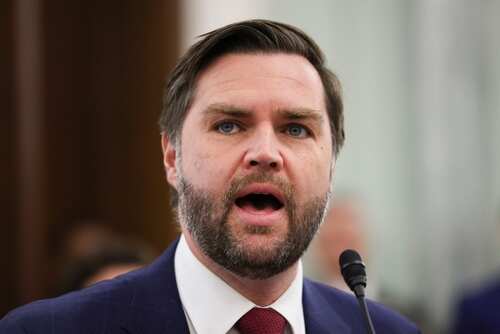
(ProsperNews.net) – The White House is keeping Iran ceasefire talks alive—but without Vice President JD Vance at the table, a sudden shift that raises questions about how close diplomacy really is to a breakthrough.
Story Snapshot
- White House Press Secretary Karoline Leavitt said U.S.-Iran ceasefire negotiations will proceed without Vice President JD Vance traveling to Pakistan.
- President Trump extended the ceasefire indefinitely while maintaining a U.S. naval blockade of the Strait of Hormuz.
- Iran has publicly signaled resistance, including statements that it would not participate in Islamabad talks before the prior deadline.
- The administration is pairing diplomacy with pressure, including insistence on IAEA oversight “from the start” in any deal tied to Iran’s nuclear program.
Why Vance’s Absence Matters to the Negotiation Strategy
White House messaging now confirms a notable recalibration: Vice President JD Vance, previously identified as a central figure for the second round of Pakistan-hosted talks, will not participate as negotiations continue. Leavitt’s briefing framed the decision as talks moving forward regardless of travel plans, but the shift is politically meaningful because Vance took part in the first round in Islamabad alongside envoy Steve Witkoff and Jared Kushner. That first session ended without a deal.
The timeline underscores the pivot. A U.S.-Iran ceasefire went into effect on April 8, with a first negotiation round held April 11 in Pakistan. As an April 21–22 deadline approached, Vance’s trip was placed on hold, and he headed to the White House for policy meetings instead of departing. The administration’s outward posture is continuity—talks continue—yet the personnel adjustment suggests the White House is tightening command-and-control internally.
Ceasefire Extended, But the Strait of Hormuz Pressure Stays
President Trump announced an indefinite extension of the ceasefire, citing a request from Pakistan, while keeping a U.S. naval blockade of the Strait of Hormuz in place. That combination signals a familiar “negotiate from strength” approach: de-escalation on paper, leverage in practice. For Americans frustrated by years of foreign-policy ambiguity, the move communicates that Washington is not relying on good faith alone, especially with global energy shipping concentrated through Hormuz.
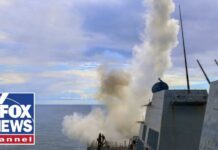
Reporting also indicates U.S. forces have continued intercepting and boarding Iranian ships attempting to evade the blockade. That detail matters because it describes a sustained enforcement posture, not merely a diplomatic posture. If shipping disruptions widen, the economic consequences could spill beyond the region, including fuel price volatility—an issue that tends to hit working families first. At the same time, any extended naval operation raises questions about duration, rules of engagement, and oversight.
Iran’s Public Signals Suggest Talks Could Stall Again
Iran’s posture remains the central obstacle. Iranian officials have refused to agree to U.S. terms for continuing negotiations, and Iranian Foreign Ministry spokesman Esmaeil Baqaei has said Iran would not participate in Islamabad peace talks. Separate coverage also indicated Iran had “no plans” to return before the earlier ceasefire deadline. Those statements do not prove talks are impossible, but they do show that public commitments are not aligned—making concrete diplomatic progress harder to verify.
Outside observers are reading the moment as unstable. One Washington correspondent assessment said that with Vance not traveling and Iran refusing participation, there may be no talks “in the offing” before the ceasefire’s prior expiration point—language that captures how quickly the window can close even when a ceasefire exists. Meanwhile, the UN Secretary-General described Trump’s ceasefire extension as creating “critical space for diplomacy,” highlighting international interest in avoiding escalation.
IAEA Oversight Is the Administration’s Bright-Line Demand
Trump has tied any durable peace deal to the Iran nuclear file, arguing that International Atomic Energy Agency oversight must be included “from the start” to avoid what he characterized as an “illusion of an agreement.” In practical terms, that sets a verification-first framework rather than a trust-first framework. For many conservatives, that emphasis on inspection and enforceability aligns with a broader skepticism that adversarial regimes will self-police—especially after years of debates over whether past agreements provided real accountability.
Still, key details remain unclear based on available reporting. The White House has not publicly specified how U.S. negotiating authority is structured without Vance in Pakistan, nor has it clarified whether Iran has offered any private pathway back to the table. Trump has also said the U.S. is in a “very strong negotiating position” while expecting to resume bombing Iran soon, but no public timeline or conditions have been provided. For citizens across the political spectrum, uncertainty like this fuels the sense that major decisions can turn on internal process rather than transparent, measurable benchmarks.
Sources:
Copyright 2026, ProsperNews.net