
(ProsperNews.net) – A late-night joke about the Epstein files has now turned into a high-stakes test of whether political power can be used to pressure a major network into silencing a critic.
Story Snapshot
- President Trump publicly urged ABC to remove Jimmy Kimmel after Kimmel mocked Trump during an Epstein-related monologue.
- Trump’s comments revived a recurring fight between the White House and entertainment media over bias, ratings, and political speech.
- ABC has not announced any move to fire Kimmel, but the episode lands amid broader scrutiny of broadcast media and regulators.
- The dispute highlights an ongoing tension: many conservatives see legacy TV as partisan, while many liberals see government pressure on media as a free-speech threat.
What Trump Said, and What Sparked the Latest Clash
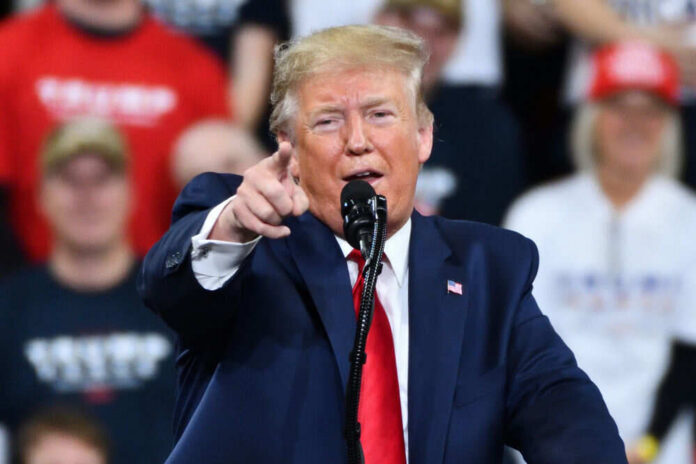
President Donald Trump called for ABC to take Jimmy Kimmel off the air after Kimmel delivered a monologue riffing on the “Epstein files” and joking about what the president “knew” and when. Trump’s response, posted on Truth Social, accused ABC of “fake news,” criticized Kimmel’s talent and ratings, and urged the network to “get the bum off the air.” The demand landed as Kimmel remains a prominent late-night critic.
Kimmel’s monologue followed the general pattern of late-night political comedy: take a headline with maximum moral heat, frame it around insinuation, and push it into a punchline. Trump’s counterpunch followed his familiar playbook as well—directly targeting the platform, the host, and the broader media brand behind him. What’s new is how quickly these fights can move from cultural sparring to questions about corporate decision-making under political pressure.
Why ABC and Disney Are Caught in the Middle
ABC and parent company Disney face a business problem and a legitimacy problem at the same time. The business problem is advertiser comfort and audience segmentation—late-night shows can be profitable, but political polarization makes brands skittish. The legitimacy problem is harder: when a sitting president calls for a comedian to be fired, any corporate response looks political. Holding firm invites more attacks; acting decisively invites accusations of capitulation.
The network also has recent precedent working against it. In September 2025, “Jimmy Kimmel Live!” was temporarily suspended after Kimmel made comments tied to the assassination of conservative activist Charlie Kirk, triggering backlash, internal corporate tension, and broader public debate. That earlier episode matters now because it demonstrates Disney has already made programming decisions under intense political scrutiny. That history will shape how viewers interpret whatever ABC does next.
The FCC Angle and the Concern About Government Leverage
The most consequential part of the story is not the insult-trading; it is the proximity of media regulation to political conflict. Reports cited in the research indicate Trump allies have discussed media shakeups beyond ABC, and that administration-linked activity has included attention to broadcast relationships that fall under regulatory review. Trump has also floated the idea of revoking ABC’s broadcast license in prior remarks, framing the network’s news coverage as dishonest.
Conservatives frustrated by years of one-sided cultural lecturing may feel little sympathy for a late-night host who has made a career out of mocking their values. Still, limited-government instincts point to a clear principle: politicians should not be in the business of deciding who gets a microphone. When regulation and editorial content collide, the public tends to assume “the system” is being used as leverage—exactly the kind of elite power-play that fuels distrust on both left and right.
What This Means for Speech, Trust, and the Broader “System Is Rigged” Mood
The episode underscores a deeper, bipartisan frustration: many Americans believe major institutions—government, media, and corporate leadership—operate as a closed loop that protects itself. Conservatives often see legacy TV as a political machine that pushes globalist priorities and “woke” cultural messaging. Liberals often see any presidential pressure on media as authoritarian. Both reactions can coexist because they share a common assumption: powerful actors pull strings behind the scenes.
BREAKING – Trump demands sacking of TV host Kimmel for 'despicable' joke https://t.co/EeSGAyR0JS pic.twitter.com/5bEISqtTWG
— Insider Paper (@TheInsiderPaper) April 27, 2026
For now, the concrete facts are limited. Trump has demanded Kimmel’s removal; Kimmel remains on air; and ABC has not publicly signaled it will comply. The bigger question is whether this dispute remains a loud but familiar culture-war episode, or becomes a precedent-setting moment where ratings, corporate caution, and regulatory pressure converge. Either way, it reveals how fragile public trust has become when politics, entertainment, and state power share the same stage.
Sources:
Trump demands ‘bum’ Jimmy Kimmel thrown off air
Suspension of Jimmy Kimmel Live!
Copyright 2026, ProsperNews.net