
(ProsperNews.net) – A catastrophic high-speed train collision in Spain claims 39 lives on a supposedly safe, recently renovated track, exposing potential dangers of rushed European infrastructure spending that American conservatives have long warned against in globalist projects.
Story Highlights
- Two high-speed trains collided near Adamuz, Spain, on January 18, 2026, killing at least 39 and injuring over 100.
- Spain’s Transport Minister calls the derailment on flat, renovated track “extremely strange,” with investigation ongoing.
- Iryo private train derailed into Renfe’s path; services suspended across Andalusia, disrupting thousands.
- Worst Spanish train crash this century contrasts sharply with 2013 speed-related derailment.
Collision Details
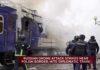
An Iryo train from Málaga to Madrid derailed at 7:45 p.m. on January 18, 2026, near Adamuz in Córdoba province, southern Spain. The train crossed into an adjacent line and struck a Renfe train from Madrid to Huelva. Spanish police confirmed 39 deaths by Monday morning, with the toll possibly rising. Rescue operations continued amid twisted wreckage on a straight, flat track renovated in May 2025. Over 300 passengers were aboard the Iryo train.
Unexplained Derailment Raises Alarms
Transport Minister Óscar Puente described the accident as “extremely strange” and difficult to explain. The derailment occurred on a recently upgraded section with no curves or speed limits implicated, unlike the 2013 crash where excessive speed caused 80 deaths. The Iryo train, less than four years old, left the tracks inexplicably. Officials expect a full inquiry within one month. This incident marks Spain’s deadliest rail disaster this century.
Seventy-five passengers remain hospitalized in Córdoba, with 15 in very serious condition and five critical. Another 170 suffered minor injuries. Families seek answers as emergency teams from the Spanish Red Cross set up aid centers in Adamuz.
Stakeholders Respond to Crisis
Iryo issued a statement expressing deep regret and confirming activation of emergency protocols in coordination with authorities. Renfe’s train bore the worst damage, with its front carriages derailed. Rail operator Adif manages the infrastructure, now under scrutiny. Andalusia President Juanma Moreno coordinates regional response efforts. Spanish Police and Civil Guard lead investigations and body recovery.
All high-speed services between Madrid and Andalusia stand suspended, stranding commuters and travelers. Rescue crews worked through Monday morning amid ongoing casualty assessments. Spain’s vast network, Europe’s largest at over 3,100 kilometers, faces its first major test since 2013.
Broader Impacts and Lessons
Short-term effects include strained emergency services in Córdoba and economic hits to Andalusian commerce and tourism. Long-term, expect safety audits of renovated tracks and tighter protocols for private operators like Iryo. Public confidence in high-speed rail, which carried 25 million Renfe passengers in 2024, may wane. This tragedy underscores risks of over-reliance on expansive government-backed infrastructure, echoing conservative concerns about fiscal mismanagement in globalist ventures.
Europe may review high-speed standards continent-wide, given Spain’s leadership role. Victims’ families face lasting grief and financial burdens, while rail workers anticipate operational shifts. American observers note parallels to domestic warnings against unchecked spending on unproven systems.
Sources:
Euronews: At least 5 dead after two Spanish high-speed trains collide in Cordoba
ABC News: 21 killed, 100 injured after high-speed train collision in Spain
SDPB/AP: At least 39 dead in Spain train collision as rescuers search for more bodies
Copyright 2026, ProsperNews.net