(ProsperNews.net) – After Washington poured $159 million into a Canadian electric-bus company that later slid into bankruptcy, Republicans are now fighting over whether “green” spending crackdowns look like accountability—or just another Washington power play.
Story Snapshot
- The Biden-era EPA awarded Lion Electric roughly $159 million under the Clean School Bus program to produce 435 electric buses, but the company later sought bankruptcy protection and halted manufacturing.
- Fifty-five school districts across multiple states were left in limbo, with about $95 million in undelivered bus orders tied to the Lion Electric awards.
- EPA Administrator Lee Zeldin has used the Lion Electric collapse to argue that Biden-era climate spending was rushed out with weak oversight and should be reviewed.
- Zeldin’s broader “take back” effort involving the $20 billion Greenhouse Gas Reduction Fund faces legal and procedural headwinds, including warnings about breach-of-contract exposure.
Lion Electric’s Collapse Put School Districts on the Hook
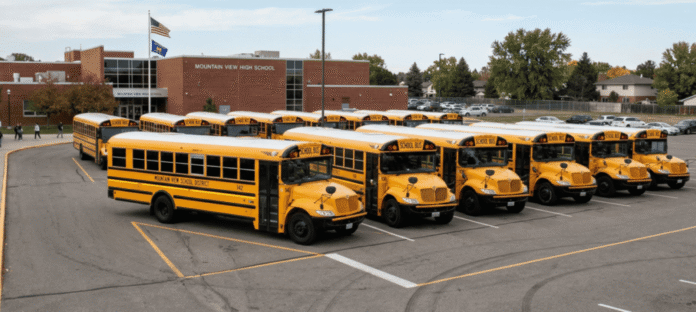
The EPA’s Clean School Bus program—created in Democrats’ 2021 infrastructure law as a $5 billion push to replace diesel buses—became a major pipeline of federal dollars to electric-bus makers. Lion Electric, a Canadian manufacturer, received about $82.7 million in October 2022 and ultimately around $159 million through May 2024 to deliver 435 buses. Afterward, the company initiated bankruptcy proceedings and stopped manufacturing, leaving 55 school districts without promised deliveries valued at about $95 million.
The record described in reporting shows warning signs existed before the money was fully out the door. Lion Electric reported losses close to the time of its first major award and later faced regulatory and legal pressure, including an SEC citation for misreporting figures and a March 2024 investor class action alleging the company concealed supply chain problems and relied on unrealistic projections. That’s the kind of paper trail that raises a basic question taxpayers and parents understand: who checked this, and how did it get through?
Zeldin’s Oversight Push Meets a Bigger, Riskier Legal Fight
EPA Administrator Lee Zeldin has framed the Lion Electric episode as part of a broader Biden-era pattern: large climate sums obligated quickly, with insufficient oversight. In 2025 he also alleged a $20 billion “scheme” tied to the Greenhouse Gas Reduction Fund and said the administration sought to reclaim funds steered to green-finance entities. The fund’s structure included a $14 billion National Clean Investment Fund and a $6 billion Clean Communities Investment Accelerator program, with Citibank serving as financial agent.
Legal analysis published during the dispute underscores the problem with “clawback first, prove later.” Experts warned that trying to rescind funding without a solid legal basis could trigger breach-of-contract suits that cost taxpayers additional money while delivering none of the promised services. That tension matters for conservatives who want waste stopped but also want constitutional, rule-bound governance. If executive agencies can freeze or terminate programs without meeting evidentiary standards in court, the precedent doesn’t just hit “green” groups—it can boomerang onto any future administration.
Courts, Evidence Standards, and the Limits of “Scandal” Claims
On the Greenhouse Gas Reduction Fund, the public record described in coverage is mixed. Inside Climate News reported that the administration was unable to present federal courts with evidence of wrongdoing and described disruptions after funds were frozen, including cancelled meetings with grantees. The same reporting described a federal prosecutor resigning under pressure rather than open a grand jury investigation she viewed as unsubstantiated. Those details don’t disprove mismanagement, but they do show why “criminal scheme” language demands proof.
What This Means for Taxpayers—And for the Right’s Internal Argument
The immediate, measurable damage is straightforward: $159 million flowed to a firm that later stopped producing buses, and school districts were left chasing options while students still need transportation. At the same time, the larger fight over the $20 billion fund illustrates a conservative dilemma in 2026: voters are tired of reckless spending and bureaucratic ideology, but they are also tired of Washington operating as if process doesn’t matter. Accountability that collapses in court can end up looking like performative politics—and it can raise the same government-overreach concerns conservatives apply elsewhere.
Lee Zeldin Throws Biden Administration Under the Bus for Sending Millions to Failed Canadian EV Company
https://t.co/3yU1dDlFQ6— Townhall Updates (@TownhallUpdates) March 23, 2026
The political context also matters. With America at war with Iran and energy costs a daily pressure point, many MAGA voters are asking why Washington can’t prioritize core needs—security, affordability, and competent basic services—over experiments that leave communities stranded. The Lion Electric story is a domestic version of that frustration: big promises, big checks, and real people left with uncertainty. The durable solution is not merely cutting or expanding programs; it is enforcing transparent criteria, strong vetting, and consequences that survive legal scrutiny.
Sources:
Zeldin’s $20B take-back bid risks plunging EPA into legal peril
EPA greenhouse gas reduction fund court case
Administrator Zeldin Announces Billions of Dollars Worth of “Gold Bars” Have Been Located
Copyright 2026, ProsperNews.net