
(ProsperNews.net) – The Pentagon’s proposed rapid deployment force, designed to quell civil unrest within an hour, is stirring up significant debate across the nation.
Story Overview
- Plans for a Domestic Civil Disturbance Quick Reaction Force (QRF) of National Guard troops have surfaced.
- Approximately 600 troops will be on standby to deploy nationwide within an hour.
- This initiative reflects an expansion of domestic readiness posture.
- Debate arises over federal military involvement in civil disturbances.
The New Force Proposal
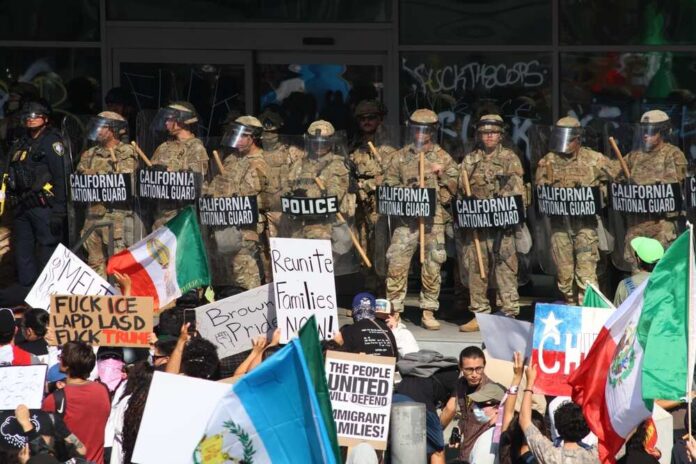
The Pentagon is reportedly planning a Domestic Civil Disturbance Quick Reaction Force (QRF) composed of National Guard troops. This unit aims to deploy nationwide within as little as one hour to manage civil unrest. The proposed force would consist of approximately 600 National Guard personnel, divided between bases in Alabama and Arizona. This initiative, described as “predecisional,” is part of contingency planning routinely conducted by the Department of Defense for domestic support to civil authorities.
Pentagon drawing up quick reaction force of National Guard ready to quell civil unrest at any moment: report https://t.co/hel4vd7Fma
— Fox News (@FoxNews) August 12, 2025
The QRF is designed to respond swiftly to unrest, with an initial element ready within one hour, followed by additional waves at two and twelve hours. The plan involves a rotation model across multiple states, with 90-day deployment rotations intended to prevent burnout. The force’s readiness timeline and cross-country scope mark a significant shift in federal involvement in domestic disturbances, raising questions about costs and command authority.
Historical Context and Precedents
Historically, the Department of Defense has engaged in contingency planning under legal frameworks like the Stafford Act for disaster response. The Trump administration has previously utilized National Guard troops for domestic missions, such as border deployments and support in Washington, D.C. The proposal for a rapid-deployment Guard QRF reflects ongoing concerns about protests, civil unrest, and violent crime in urban areas, where federal and local coordination challenges persist.
National Guard units have been activated by governors during civil unrest in the past, but a centrally organized, standing, multi-state QRF with explicit one-hour readiness windows is unprecedented. This proposal could significantly alter the norms for federal involvement in civil disturbances, potentially setting a precedent for future administrations.
Implications and Reactions
In the short term, the proposed QRF could enhance federal support to local authorities during unrest, improving response times and coordination. However, it also invites political and legal scrutiny over domestic military involvement, with debates likely to intensify regarding civil liberties and federalism. The continuous standby and 90-day rotation model could impact National Guard personnel’s readiness and tempo.
Pentagon drawing up quick reaction force of National Guard ready to quell civil unrest at any moment: report #ThePentagon #DODhttps://t.co/kJdVII2Tu2
— Suzi (@Sandy5Suzi) August 12, 2025
Long-term implications include the institutionalization of a national rapid-deployment Guard QRF, which could influence protest dynamics and public trust in civil-military relations. Budgetary impacts are also a concern, with potential costs in the hundreds of millions if air assets and aircrews are on standby. The proposal’s deterrent effect on large-scale unrest could be offset by a potential chilling effect on lawful assembly if perceived as militarization.
Copyright 2025, ProsperNews.net