

(ProsperNews.net) – Iran’s rulers are facing a rare moment of open defiance from inside their own political class—right as street protests expose how fast a regime can lose legitimacy when it can’t feed, employ, or even credibly govern its people.
Story Snapshot
- Former Iranian Prime Minister Mir-Hossein Mousavi, under house arrest since 2011, issued a sharp statement declaring: “Enough is enough. The game is over.”
- Protests that began in late December 2025 over economic collapse have spread nationwide and now include chants rejecting the regime itself.
- Rights monitors cited at least 42 deaths and more than 2,270 detentions, while Tehran has used internet blackouts to limit coordination and reporting.
- President Trump publicly warned Iran’s leaders after reports of violence, escalating already tense U.S.-Iran regional calculations.
Mousavi’s Statement Signals a Crack the Regime Tried to Seal
Mir-Hossein Mousavi served as Iran’s prime minister from 1981 to 1989 and has been under house arrest since 2011, making his late-January statement unusually consequential. By pushing out the line “Enough is enough. The game is over” through his Kalame media outlet, Mousavi re-entered public life at the precise moment Tehran is struggling to project control. The research does not show he is organizing protests, but symbolism matters in closed systems.
'Enough is enough. The game is over,' #Iran ex-PM tells leadership | New Straits Times https://t.co/TpMvjuA1Qx
— The Cat 🇮🇪🇲🇾🇬🇧🌿🍀🌱 (@wong_denton) January 29, 2026
Mousavi’s reappearance also underscores a basic truth Americans understand: regimes that suppress speech often fear it because it reveals what force cannot fix—legitimacy. Iran’s leaders have long relied on coercion, censorship, and selective concessions. Analysts cited in the research argue those tools may be reaching their limits as the current protests broaden in size and message, turning from hardship complaints into direct rejection of the ruling structure.
Economic Collapse Lit the Fuse—And It Keeps Burning
Protests began on December 28, 2025, at Tehran’s Grand Bazaar, tied to a rapid collapse of the rial that reportedly hit roughly 1.4 million to the dollar. The immediate anger is economic: inflation, unemployment, and a sense that ordinary families are paying for priorities decided by ideological elites. Protest chants referenced in reporting include “Not Gaza, not Lebanon, my life for Iran,” capturing resentment about resources flowing outward while living standards at home crater.
That mix—currency collapse plus the feeling of national humiliation—helps explain why the demonstrations have spread across all 31 provinces, according to the research summary. Verified videos cited by Reuters showed clashes in multiple locations, including Tehran’s Grand Bazaar and scenes like flag-tearing in Mashhad. The scope matters because it reduces the regime’s ability to isolate dissent as a “local” problem or a narrow factional dispute.
Tehran’s Playbook: Repression, Blackouts, and Competing Narratives
Human rights monitoring cited in the research put the toll at at least 42 killed and more than 2,270 detained, while security forces reportedly suffered casualties as well. The Iranian state has historically tried to overwhelm protest movements through arrests, fear, and information control. In this cycle, the government reportedly imposed an internet blackout beginning January 8, aiming to disrupt coordination and reduce the flow of video evidence that can galvanize wider participation.
Iran’s leadership has also leaned on a familiar narrative that unrest is foreign-instigated sedition. The research notes claims that protesters attacked critical infrastructure and public services, while protester messaging frames the movement as citizens demanding a livable future. With restricted information and competing propaganda, outside observers have limits on verification, and casualty counts can be incomplete. Still, multiple sources agree the protests are large, sustained, and no longer confined to a single grievance.
Trump’s Warning Raises the Stakes—But Iranians Fear “Rescue” by Outsiders
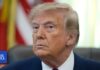
President Trump issued a public warning on January 2, saying the U.S. was “locked and loaded” if Iranian security forces killed more protesters, while Iran’s foreign minister warned American troops in the region could be targeted if Washington interfered. From a conservative U.S. perspective, deterrence is not charity—it is a national-security tool. Tehran’s regime has spent decades threatening Americans and allies, so signaling consequences for mass violence fits a hard-nosed posture.
At the same time, the research highlights a critical constraint: many Iranians view foreign intervention as politically toxic, shaped by historical memory and recent regional war trauma. That reality complicates any outside attempt to “claim” Iran’s unrest, including from diaspora figures seeking leadership credibility. The bottom line is strategic: Tehran faces pressure from within and without, and mishandling either side could deepen instability across the Middle East.
What to Watch Next: Legitimacy, Not Just Street Numbers
The most telling question is not whether protests continue for days or weeks, but whether the regime can restore trust while the economy collapses and censorship tightens. Experts cited in the research describe the crisis as a breakdown of confidence, not merely exchange rates. Mousavi’s message lands in that context: a high-profile, long-silenced figure publicly implying the system’s time is up. Whether that translates into political change remains uncertain, but the legitimacy problem is now visible.
For Americans watching from afar, the lesson is straightforward: hard economies and heavy-handed governments eventually collide, and censorship doesn’t solve the underlying math of empty wallets and broken promises. Iran’s rulers can arrest people and cut the internet, but they cannot “blackout” inflation, unemployment, or a currency that no one trusts. That is why this round of unrest—and Mousavi’s defiant line—has gained international attention.
Sources:
Spreading protests expose legitimacy crisis for Iran’s leadership
‘Enough is enough. The game is over,’ Iran ex-PM tells leadership
Iran’s Protest Movement and Diaspora Politics
Iran Protests, Trump, Tehran Economic Crisis, Currency, Inflation
Iran rulers’ legitimacy crisis
Copyright 2026, ProsperNews.net