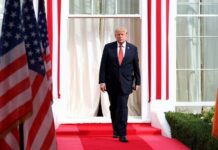
President Trump said every state’s Medicaid program will get “most favored nation” drug prices, with a White House estimate of $64.3 billion in savings over 10 years.
Story Snapshot
- Trump announced all 50 states, Washington, D.C., and Puerto Rico are in a Medicaid drug pricing model.
- The White House projected $64.3 billion in taxpayer savings over a decade.
- Nine additional drugmakers agreed to offer Medicaid international-match discounts.
- Analysts warned Medicaid already gets deep discounts, so new savings may be modest.
What The Announcement Covers And Why It Matters
President Trump said the administration’s Medicaid plan extends “most favored nation” pricing to all 50 states, the District of Columbia, and Puerto Rico. The policy seeks to match prices paid by wealthy countries for selected outpatient drugs. The White House framed the plan as a nationwide change, not a pilot or narrow test. The Council of Economic Advisers pegged savings at $64.3 billion over ten years, arguing lower net Medicaid drug costs will ease pressure on state and federal budgets.
The administration also announced deals with nine drug companies to support the pricing approach. Officials said the agreements will allow state Medicaid programs to buy some medicines at international benchmark prices, and they expect billions in savings from those products alone. Prior agreements with other firms, including well-known manufacturers, aimed to create a path where more drugs would be offered at the same net prices seen abroad. Officials cast this as a way to fight high list prices that strain public budgets.
How The Model Would Work For States And Patients
State Medicaid programs split costs with the federal government, so lower drug prices could reduce spending for both. Under the model, a drug’s net price would track benchmark prices from peers overseas, instead of only relying on current rebates. States would then pay less per prescription when the drug qualifies. Patients on Medicaid usually have low or no co-pays, so the main near-term effect is on government spending, not at the pharmacy counter. The White House tied the policy to protecting coverage and access.
Officials said the model covers every state program, which reduces uneven access that can happen when only a few states opt in. Supporters argue that a broad, predictable benchmark can push manufacturers to reset prices across programs. Backers also say the shift challenges a system where the United States has paid more than peer nations for brand drugs. The framing targets a shared concern across parties: powerful industries set prices that family budgets and taxpayers must swallow, while government fails to rein them in.
What Skeptics Are Questioning Right Now
Analysts and some reporters questioned the scale of savings because deal terms have not been released. Without public contract details, outside researchers cannot confirm how many drugs, which prices, or what limits apply. That makes it hard to vet the $64.3 billion estimate. Some coverage said the administration gave states a tight timeline to sign on, which sharpened the debate over how the plan will work in practice.
HUGE: The Trump Admin is extending the incredible benefits of Most-Favored-Nation drug pricing to ALL state Medicaid programs across the country.
This will save states BILLIONS of dollars as @POTUS continues to usher in the biggest price reduction in prescription drugs. pic.twitter.com/EZiGefWuIN
— Maga Nation (@tmoneJs) September 18, 2026
Experts also note Medicaid already gets large rebates, sometimes over half of a drug’s list price. Reuters reported Medicaid’s share of national drug spending is about one in ten dollars, and discounts can exceed eighty percent in some cases. If that is true for many targeted drugs, then the room for extra savings may be smaller than the headline suggests. Other analysts said the impact on some manufacturers could be limited because sales volume in Medicaid is smaller than in commercial plans or Medicare.
How This Fits The Bigger Drug Pricing Fight
This move follows years of both parties promising to curb drug costs, and of governments pointing to international prices as a guide. Studies and policy briefs have found that reference pricing can reduce spending, but estimates vary and often depend on design details, like which countries set the benchmark and whether prices are net of rebates. Supporters view this as a practical step to stop overpaying. Critics worry about pressure on innovation or drug availability if prices reset too low.
The larger story reaches beyond a single model. Voters across the spectrum see drug bills as a symbol of a system that favors insiders. They hear huge savings claims when a plan launches, then see slow or uneven change. This plan puts concrete numbers and a nationwide scope on the table. The next tests are simple but tough: publish clear results, show which drugs dropped in price, and prove that state budgets and patients truly benefit. Until then, the promises will meet real-world receipts.
Sources:
wftv.com, rmb.reuters.com, yahoo.com, nbcnews.com, qz.com, whitehouse.gov, rollingout.com
© prospernews.net 2026. All rights reserved.