

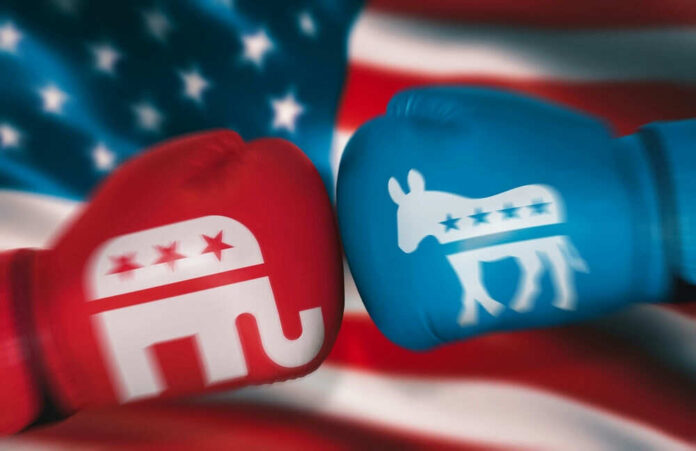
(ProsperNews.net) – Alan Dershowitz, once a lion of liberal legal thought, now stands as a symbol of fracture in American politics, his public split from the Democratic Party is not just personal, but a warning flare for anyone watching the evolving battle over Israel, identity, and party loyalty in the United States.
Story Snapshot
- Alan Dershowitz, famed civil libertarian and lifelong Democrat, has renounced the party over its stance on Israel and Jewish issues.
- The 2024 Democratic National Convention, marked by anti-Israel rhetoric and protests, served as the breaking point.
- Dershowitz is pledging to back Republican candidates in the 2026 midterms, signaling a seismic political realignment.
- His move highlights deepening ideological divides and challenges facing both parties in the age of polarization.
Dershowitz’s Departure: When a Party Loses Its Most Loyal Critics
Alan Dershowitz’s decision to leave the Democratic Party did not happen in a vacuum. For decades, he embodied the classic American liberal: a staunch defender of civil liberties, an advocate for Israel, and a Harvard law professor whose presence loomed over courtrooms and cable news alike. Yet after the October 7, 2024, Hamas attack on Israel, the Democratic Party’s internal response, marked by vocal, progressive criticism of Israel and a chorus of convention speakers eschewing unequivocal support, became intolerable for Dershowitz. He did not mince words, describing the Democratic National Convention as “disgusting” for its anti-Jewish and anti-Israel overtones.
For Dershowitz, this was not a one-off rupture. The seeds of discontent had been sown for years, as he sparred with the party’s progressive wing over Israel and the boundaries of criticism. He had warned as early as 2016 that he might leave if the party leadership moved further left on Israel. The events of 2024 made his departure feel, to some, inevitable. By September 2024, he formally announced his exit, declaring himself an Independent and pledging that his loyalties would now lie elsewhere come the 2026 midterms.
The Democratic Party’s Crossroads: Identity, Israel, and the New Progressive Challenge
The Democratic Party’s internal rift over Israel is not just about foreign policy. It reflects a generational and ideological struggle over the party’s core identity. The rise of progressive lawmakers, like Alexandria Ocasio-Cortez and Bernie Sanders, has brought human rights critiques of Israeli policy to the forefront, challenging the party’s historic pro-Israel consensus. The 2024 convention’s tone, rife with protests and impassioned speeches, captured this tension for a national audience. For many Jewish Democrats and moderates, Dershowitz’s exit is both a symptom and a warning: the party’s coalition is fracturing under the weight of irreconcilable worldviews.
Party leaders now find themselves balancing the demands of an energized, younger base with the electoral realities of swing states and traditional constituencies. The challenge is existential. If prominent figures like Dershowitz, once viewed as unshakeable Democratic stalwarts, are driven to renounce the party, how many others will follow? The answer, and its electoral consequences, are anything but clear.
Ripple Effects: Realignment, Repercussions, and America’s Political Landscape
Dershowitz’s public commitment to support the GOP in 2026 delivers more than a headline; it signals a potential realignment with broader implications. In the short term, his departure has sharpened media scrutiny on party divisions and could sway voting patterns, especially among Jewish Americans and pro-Israel voters. The Republican Party, eager to capitalize on Democratic disarray, is poised to court disaffected voters with renewed vigor. Longer term, this episode could accelerate the polarization of U.S. foreign policy debates, making bipartisan consensus on issues like Israel ever more elusive.
Communities most affected include the Democratic Party itself, now tasked with bridging its ideological chasms, and Jewish Americans, some of whom may feel politically homeless or compelled to reconsider their affiliations. The social discourse around anti-Semitism, free speech, and party identity will only intensify, echoing across campuses, synagogues, and campaign rallies nationwide.
Expert Reflections: What Dershowitz’s Break Reveals About America’s Future
Political analysts see Dershowitz’s defection as emblematic of broader shifts. His move is not simply about Israel; it’s about the changing face of American liberalism and the volatility of party coalitions in a polarized era. Scholars note that high-profile exits like this often presage deeper realignments, particularly when they stem from clashes over fundamental values rather than policy details. Some commentators defend Dershowitz’s stand as a principled rejection of anti-Semitism, while others argue the party’s criticisms of Israeli government actions are warranted and not inherently anti-Jewish. This debate is likely to persist, shaping the narratives of both parties as 2026 approaches.
All major media and academic sources corroborate Dershowitz’s narrative and motivations, though interpretations of the Democratic Party’s actions remain contested. What is clear: the party that once claimed Dershowitz as one of its own has lost a prominent voice, and his journey from loyal critic to outspoken opponent may be a bellwether for the next great realignment in American politics.
Copyright 2025, ProsperNews.net