

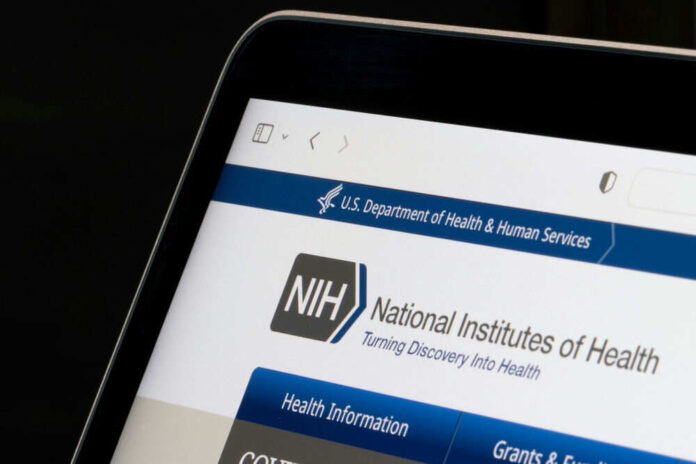
(ProsperNews.net) – Federal courts have forced the NIH to reopen the spigot on hundreds of millions in DEI and gender-identity grants, testing how far Washington can still funnel taxpayer money into woke health projects even under a Trump administration that promised to shut them down.
Story Highlights
- NIH must reconsider thousands of stalled DEI and gender-identity grants worth an estimated $783 million after legal settlements.
- Courts ruled that earlier terminations of these grants likely violated federal procedure, ordering over 2,000 awards restored.
- Trump’s team is simultaneously pulling DEI language out of NIH policy and warning that many of these projects will not be renewed.
- The fight exposes a deep struggle over who controls science spending: voters’ elected leaders or entrenched bureaucrats and activist groups.
How a Quiet Bureaucratic Fight Put Nearly a Billion in Woke Grants Back on the Table
Early in 2025, the returning Trump administration pushed NIH to stop pouring money into projects framed around diversity, equity, inclusion, and gender ideology, directing the agency to halt reviews and terminate hundreds of existing awards that fell into those categories. Lawsuits quickly followed from researchers, unions, and left-leaning advocacy outfits, arguing that these moves were unlawful and ideologically discriminatory. After months of legal wrangling, NIH agreed to reconsider thousands of frozen, denied, or withdrawn grants under its normal scientific review system, instead of the tougher anti-DEI filters that had been imposed.
The settlement covers a massive pool of money: court filings and Supreme Court analysis reference roughly $783 million in disputed NIH funding tied to DEI, gender identity, and related topics. That includes projects on transgender health, workforce diversity, LGBTQ+ health, vaccine hesitancy, and COVID-19, areas progressives have heavily used to advance social agendas through the health system. For conservative taxpayers already squeezed by inflation and record federal debt, seeing nearly a billion dollars steered back toward these priorities raises real questions about accountability and spending discipline inside Washington’s scientific establishment.
Courts, State Attorneys General, and Advocacy Groups Forced NIH’s Retreat
By mid-2025, three separate plaintiff groups had hauled NIH into federal court, including individual scientists, professional associations, labor unions, and a coalition of Democratic state attorneys general. A federal judge in Massachusetts found the mass terminations likely violated basic administrative law, ordering NIH to restore more than two thousand already-awarded grants and blasting the agency for leaning on a vague, undefined notion of DEI while yanking funding midstream. Higher courts later agreed that NIH had effectively barred certain categories of research, including DEI and gender-identity studies, raising red flags about arbitrary decision-making, even as the Supreme Court narrowed how much direct relief researchers could receive.
As legal pressure mounted, NIH and the administration struck settlements in late December 2025. Under those deals, NIH promised to review frozen, denied, or withdrawn applications “in good faith” using its standard peer-review machinery, without the explicit anti-DEI criteria that had been guiding earlier decisions. In exchange, the plaintiffs—researchers, advocacy groups, and the attorneys general—dropped their remaining claims over those stalled applications. That truce triggered a flurry of action: within days, NIH began issuing decisions on hundreds of backlogged proposals, and state officials reported that over five thousand grants nationwide were now covered by the settlement’s reconsideration requirements.
Trump’s NIH Is Rolling Back DEI Rules Even as Old Grants Get a Lifeline
While the settlement forces NIH to give these contested projects another look, it does not lock in DEI as a long-term priority. On the policy side, NIH leadership has already moved to strip formal DEI requirements out of many funding announcements, eliminating mandatory “Diversity Plans” and “Plans for Enhancing Diverse Perspectives” that previously nudged institutions to hire or design studies around identity categories. The agency is also revising inclusion rules in clinical research to focus more narrowly on women and racial or ethnic minorities, walking away from broader equity rhetoric that often justified expansive social-engineering experiments under the banner of health.
NIH Director Jay Bhattacharya has sent an even clearer signal about where things are headed. Public statements attributed to him stress that NIH is “not interested in funding DEI anymore” and that many restored DEI-linked grants do not align with the agency’s renewed priorities. Because courts forced those awards back into place, the administration cannot immediately pull the plug. However, Bhattacharya has indicated that when these projects come up for renewal in 2026, they will likely not be extended. For conservatives, that means the settlement looks less like a permanent defeat and more like a temporary pause while the administration rewrites the rulebook in a more merit-based, less ideological direction.
What This Power Struggle Means for Taxpayers, Science, and Constitutional Values
Behind the legal jargon lies a fundamental question: who sets the agenda for federally funded science in this country—unelected bureaucrats and activist-aligned grant panels, or the voters’ chosen leaders operating within constitutional bounds? For years, DEI bureaucracies embedded inside NIH and universities have steered billions toward projects framed around identity politics, often with thin ties to concrete health outcomes for ordinary Americans. The 2025 directives sought to claw back that influence, but the lawsuits show how deeply entrenched these structures have become and how quickly they can turn to the courts to protect their funding pipelines.
For families watching grocery bills climb and retirement savings stretched, the idea that hundreds of millions can be locked into niche ideological research feels like a slap in the face. At the same time, the courts’ willingness to second-guess large-scale grant cancellations raises its own concerns about judicial micromanagement of executive spending decisions, which could hamper future efforts to cut waste or redirect funds toward genuine medical breakthroughs. In the end, the Trump administration’s pushback has already forced NIH to roll back some DEI architecture and rethink its priorities, but this episode makes clear that the fight over woke influence in America’s research establishment is far from finished—and that vigilance from engaged citizens will be essential to keep agencies from quietly steering taxpayer dollars away from core health needs and constitutional principles.
Sources:
STAT: NIH agrees to reconsider frozen and denied DEI-related grants
GovExec: Trump administration agrees to drop anti-DEI criteria for stalled health research grants
STAT: NIH grants director Jay Bhattacharya says restored DEI funding will not be renewed
First Circuit: Opinion in American Public Health Association v. NIH
NIH Grants and Funding Information: Implementation of new initiatives and policies
Inside Higher Ed: NIH approves hundreds of grant applications it shelved or denied
Higher Ed Dive: NIH settlement with attorneys general over DEI research grants
Norton Rose Fulbright: Supreme Court leaves NIH grant recipients with reduced funding
Copyright 2026, ProsperNews.net















![Trump's $5,000 Stimulus Check to All Adults [Dividend Check]](https://prospernews.net/wp-content/uploads/sites/3/2026/09/hqdefault-100x70.jpg "Cash Bribe? Trump Dangles $5,000")