
(ProsperNews.net) – On January 29, 2025, the skies over Washington Reagan National Airport witnessed a catastrophic collision that forever altered the landscape of aviation safety.
Story Overview
- American Airlines Flight 5342 collided with a U.S. Army Black Hawk helicopter
- The tragedy resulted in 67 fatalities and complete aircraft obliteration
- NTSB investigations highlight air traffic control and equipment failures
- Call for urgent reforms in aviation safety protocols
Collision of Two Worlds
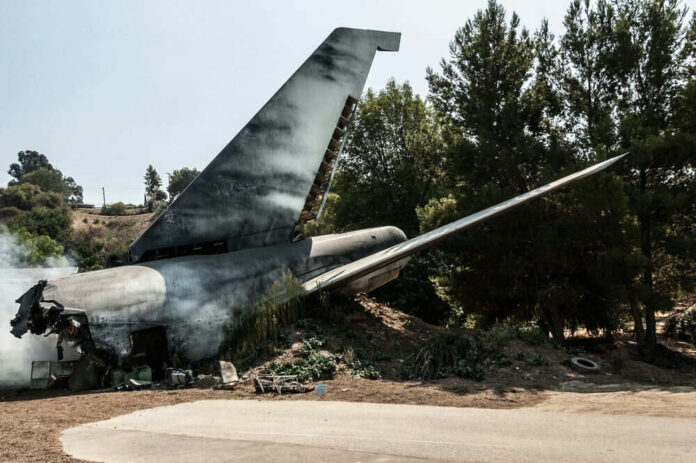
The midair collision between American Airlines Flight 5342 and the U.S. Army Black Hawk helicopter was not only a tragic loss of life but a collision of two operational worlds, commercial and military aviation. As Flight 5342 approached its destination, the Black Hawk helicopter, involved in a training mission, crossed its path. The aftermath was devastating, leaving one aircraft reduced to ash and the other barely recognizable, with only the tail and a single wing remaining.
This incident has drawn public attention to the complexities of shared airspace, especially in high-traffic areas like Washington D.C. The risks involved are not new, but the sheer scale of this tragedy has prompted renewed scrutiny over existing protocols and safety measures.
Investigative Revelations
The National Transportation Safety Board (NTSB) quickly launched an investigation, releasing shocking surveillance footage and detailed animations of the crash sequence by August 2, 2025. The initial findings pointed to alarming discrepancies in the Black Hawk’s altimeter readings, which reportedly exhibited a consistent 100-foot error in test flights. These errors, coupled with potential air traffic control failures, have become focal points in understanding the incident’s causes.
As the investigation unfolds, the NTSB has been steadfast in its pursuit of truth, resisting pressure to shift blame prematurely. The agency’s efforts underscore the importance of transparency and accountability in preventing future tragedies of this magnitude.
Stakeholders and Their Roles
Several key stakeholders are involved in the aftermath of this disaster. American Airlines, responsible for the safety of its passengers, faces significant scrutiny, as does the U.S. Army, whose Black Hawk helicopter was part of a routine training mission. The NTSB leads the investigation, while the Federal Aviation Administration (FAA) and military aviation authorities are under the spotlight for their roles in airspace management and safety oversight.
The families of the victims, grappling with unimaginable loss, demand answers and accountability. Their voices add a personal dimension to the broader calls for reform and justice.
Echoes of Change
The implications of this collision extend far beyond the immediate aftermath. In the short term, the tragedy has disrupted airport operations and military training schedules, while also laying bare the vulnerabilities within the current aviation safety framework. Long-term, it could catalyze sweeping changes in airspace management, with calls for mandatory upgrades to military aircraft instrumentation to prevent similar mishaps.
Public demand for accountability continues to mount, placing political pressure on the FAA and military to adopt stringent safety measures. These developments highlight the need for cohesive and integrated airspace management strategies that prioritize the safety of all aircraft, civilian or military, navigating shared skies.
Copyright 2025, ProsperNews.net