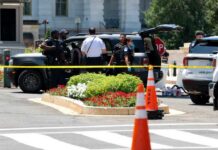

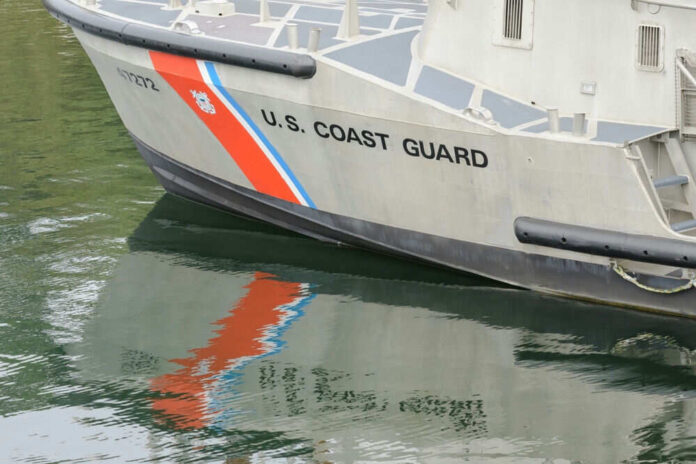
(ProsperNews.net) – A U-Haul truck barreling toward a federal military installation during a volatile immigration protest turned deadly when Coast Guard security opened fire, wounding the driver and striking a bystander with shrapnel in an incident now under FBI investigation.
Story Snapshot
- Coast Guard officers shot at a U-Haul truck attempting to breach Coast Guard Base Alameda on Thursday night
- Two people were wounded, the driver and a bystander hit by a fragment, following a day of heated protests against immigration enforcement
- The FBI has taken over the investigation of the shooting at the federal installation
- Hundreds had gathered earlier to protest Border Patrol presence at the base amid fears of escalating immigration raids
When Protest Meets Perceived Threat
The collision between civil demonstration and federal security protocols reached a breaking point around 10:00 p.m. Thursday outside Coast Guard Base Alameda. After hours of protests against Border Patrol officers stationed at the facility, a U-Haul truck drove erratically toward the bridge connecting to Coast Guard Island. Security personnel issued multiple verbal commands to halt. The driver ignored them. Officers opened fire. The sequence illustrates the razor-thin margin separating lawful protest from actions that trigger lethal force at military installations, where security personnel operate under strict engagement protocols designed to protect critical infrastructure.
The Day That Built to Crisis
Thursday’s violence didn’t emerge from nowhere. Hundreds of activists had descended on the Alameda base during daylight hours, alarmed by the arrival of Border Patrol agents and anticipating what they feared would be a major escalation in immigration enforcement operations. The protest reflected California’s deepening resistance to federal immigration policy, with activists viewing the base as ground zero for anticipated raids. By evening, most demonstrators had dispersed, but the tension lingered. When the U-Haul appeared, driving erratically and backing toward the heavily secured bridge, Coast Guard personnel faced a split-second decision about intent and threat level at a facility where security breaches carry national implications.
The Department of Homeland Security confirmed that the driver sustained injuries and underwent mental health evaluation, while the bystander received treatment and was released from the hospital. No Coast Guard personnel were harmed. The FBI’s immediate assumption of investigative authority signals federal recognition of the incident’s complexity, sitting at the intersection of immigration enforcement tensions, protest rights, and security protocol at a military installation.
Federal Installations as Flashpoints
Coast Guard Base Alameda occupies unique real estate in California’s immigration enforcement landscape. The island facility, accessible only by bridge, has become a symbolic target for activists precisely because of its federal character and its role as a staging ground for various Department of Homeland Security operations. The bottleneck geography, a single bridge entry point, creates inherent security challenges. Any vehicle approaching becomes a potential threat requiring immediate assessment. Security forces at such installations don’t operate under normal law enforcement rules of engagement; they function under military protocols that prioritize base protection and assume hostile intent when commands are ignored near restricted areas.
The shooting raises uncomfortable questions about proportionality and threat assessment in politically charged environments. Law enforcement defends the response as necessary protection of a federal facility when a vehicle refused commands and advanced toward a restricted zone. Activists counter that the shooting reflects excessive force and hair-trigger responses to immigration-related protests. Both perspectives contain elements of truth, which is precisely why the FBI investigation matters. The agency must untangle whether security forces followed appropriate protocols, whether the driver posed a genuine threat, and whether alternative responses were feasible in the compressed timeline of the confrontation.
The Aftermath and What Comes Next
Security at Coast Guard Base Alameda has intensified since Thursday night, with heightened protocols likely to remain in place as the FBI investigation proceeds. The broader implications extend beyond one California installation. Federal facilities nationwide hosting immigration enforcement operations can expect similar protests, and security forces at those locations will scrutinize the Alameda incident for lessons about threat assessment and proportional response. For activist communities, the shooting represents a chilling escalation they fear will normalize armed responses to immigration protests. The driver’s mental health evaluation adds another layer, raising questions about whether psychological distress played a role in the confrontation and whether that should alter how the incident is understood and prosecuted.
The investigation will determine whether charges are filed and against whom. Meanwhile, the shooting has already achieved what no protest speech could: it has focused national attention on the volatile intersection of immigration enforcement, federal security, and constitutional protest rights. California’s resistance to federal immigration policy shows no signs of abating, and neither does the federal government’s determination to use military installations for enforcement operations. Thursday night’s violence suggests we’ve entered a new and dangerous phase where the friction between these forces can turn lethal in seconds, with bystanders caught in the crossfire both literally and politically.
Copyright 2025, ProsperNews.net