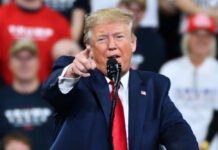


(ProsperNews.net) – A direct threat to a major news network’s broadcast license erupts after tough questions about the Epstein case, fueling new alarms over press freedom and executive power.
Story Snapshot
- President Trump threatened ABC News’ broadcast license after a reporter pressed him on the Epstein investigation and DOJ free speech policy.
- The exchange followed controversial DOJ remarks about prosecuting hate speech, raising fears of government overreach and attacks on the First Amendment.
- Survivors and lawmakers continue to demand transparency while the House moves toward releasing Epstein-related files.
- The incident spotlights escalating tensions between the White House, the press, and advocates for accountability in high-profile investigations.
Trump Threatens ABC News License After Epstein Question
During a tense September 2025 press conference, President Trump openly threatened ABC News with the loss of its broadcast license after reporter Jonathan Karl questioned him about the Department of Justice’s shifting stance on free speech and the politically charged Epstein case. Trump framed ABC’s critical coverage as “hate speech,” a move that alarmed press freedom advocates and reignited debate over the appropriate limits of executive power in regulating the media.
The confrontation came on the heels of a controversial statement from Attorney General Pam Bondi, who had suggested the DOJ might pursue hate speech prosecutions, only to quickly walk back her comments following fierce bipartisan criticism. Trump’s remarks appeared to leverage the DOJ’s ambiguity, warning that media outlets like ABC risk consequences for what he characterized as “divisive” or “hateful” reporting. For many conservatives, the exchange highlighted what they see as years of media hostility and double standards, but it also triggered scrutiny about potential government overreach into constitutionally protected speech.
Epstein Case Continues to Fuel Political and Media Firestorm
The broader backdrop to Trump’s threat is the still-unfolding Jeffrey Epstein scandal. Survivors and lawmakers have pushed for the public release of thousands of government files relating to Epstein’s sex trafficking network and his powerful associates. The House Oversight Committee has already released more than 20,000 documents, while a congressional vote looms on whether to make the full client list public. This push for transparency has bipartisan support, but it comes amid fierce partisan jockeying over who stands to lose most from potential revelations. The DOJ has sent mixed messages about its willingness to release information, further muddying the waters and fueling speculation about political motives.
Epstein survivors have publicly criticized both the politicization of their cause and the inconsistent messaging from government officials. Many argue that the focus should remain squarely on justice and transparency, not on political point-scoring or retaliatory threats against the press. As the House prepares to vote on full disclosure, survivors and advocates warn that the continued politicization of the investigation threatens to undermine their pursuit of accountability and the public’s trust in government institutions.
Press Freedom Versus Executive Authority: The Constitutional Stakes
Trump’s willingness to threaten a broadcast license over critical journalism draws fresh attention to the ongoing battle lines between the executive branch and the free press. Legal experts note that while regulatory threats rarely result in actual license revocation, the act of making such threats can have a chilling effect, discouraging tough questions and investigative reporting. The First Amendment, a cornerstone for conservatives and constitutionalists alike, is designed to shield journalists from exactly this kind of government intimidation. Yet, with the DOJ’s stance on hate speech in flux and Trump’s rhetoric escalating, the boundaries of press freedom face renewed tests.
Industry groups, legal scholars, and press freedom organizations have condemned the threat as an unprecedented escalation. Some conservative voices argue that persistent media bias merits increased scrutiny, but most agree that retaliatory moves by the executive set a dangerous precedent. As political tensions rise and the Epstein files debate intensifies, many Americans are left questioning whether foundational constitutional protections can withstand the current climate of polarization and power struggles.
Amid these developments, the public’s demand for transparency, accountability, and respect for constitutional rights remains as urgent as ever. The coming weeks will test not just the resolve of Congress and the media, but also the resilience of American democratic norms under extraordinary pressure.
Copyright 2025, ProsperNews.net