
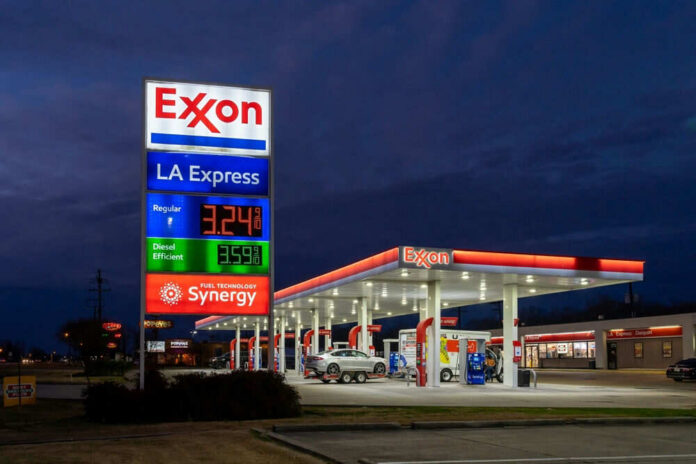
(ProsperNews.net) – America’s families face skyrocketing gas prices worse than the 1970s energy crisis, betraying President Trump’s promise to keep us out of endless foreign wars and hitting wallets hardest amid already brutal inflation.
Story Highlights
- Iran War disrupts 3-4 times more daily oil barrels than 1970s crises, halting Hormuz tankers and Gulf production.
- Oil prices surge from $70 to $89-92 per barrel in weeks, with risks to $100-150 if prolonged.
- Qatar LNG (20% global trade) offline, Bahrain refinery ablaze, Tehran depots hit—global energy chokehold tightens.
- MAGA base questions endless regime change entanglements as high energy costs erode Trump gains on inflation.
- Trump hints war end nears, but Iran denies talks, mocking U.S. as families brace for pain at the pump.
War Triggers Unprecedented Oil Shock
U.S. and Israeli strikes began February 28, 2026, targeting Iranian oil facilities after failed indirect talks on February 17. Tanker traffic in the Strait of Hormuz stopped immediately, handling 20 million barrels per day or 20% of global oil. Gulf states like Saudi Arabia, Iraq, and UAE cut production due to full storage and export halts. This combines shipping blockages with direct facility damage, creating a supply crunch far beyond past embargoes. Families already strained by prior inflation now pump gas at near-$100 barrel rates, questioning endless war costs.
Scale Dwarfs 1970s Crises
Historian Nicholas Mulder calls this the largest oil supply shock ever, with daily losses 3-4 times higher than the 1973 Yom Kippur embargo’s 4 million barrels or 1979 Revolution’s 4-6 million. Modern reliance on Hormuz exposes 16 million barrels at risk after pipeline reroutes. Qatar shut 10 billion cubic feet per day of LNG, 20% of world trade, doubling prices in Asia and Europe. Bahrain’s refinery burns, its desalination plants hit, sparking civilian shortages. Conservatives fed up with globalism see this as regime change folly repeating Iraq and Afghanistan drains.
Stakeholders Locked in Escalation
President Trump escalates strikes to force concessions, assembling forces post-Hezbollah defeats and Iran’s 2025 unrest. New Supreme Leader Ayatollah Mojtaba Khamenei retaliates, striking Bahrain and threatening full Hormuz closure. China, buying 1.6 million barrels daily from Iran, pushes ceasefires to protect cheap imports. Gulf producers declare force majeure, prioritizing infrastructure over output. This power struggle leaves American consumers footing the bill for distant battles, eroding trust in promises of no new wars.
Trump’s recent hints of a nearing end caused price swings, with postponed strikes on power plants to allow a 15-point peace plan including nuclear rollback. Yet Iranian officials deny talks, demanding reparations and Hormuz control while ridiculing U.S. efforts.
The Iran War Has Already Hurt Oil Production More Than the '70s Energy Crisis Did https://t.co/KXQKRrP1wp via @reason
— George Lominadze (@GeorgeLominadze) March 25, 2026
Economic Pain Hits Home
Short-term premiums add $10-14 per barrel, potentially $100-150 with prolonged shutdowns. Goldman Sachs warns of $14 for full Hormuz halt over four weeks. Restoration demands weeks of technical work per S&P Global. Global consumers face higher energy bills, Gulf civilians water shortages, and importers like South Korea scramble. MAGA supporters, weary of overspending and immigration chaos, now rage at war-driven inflation undoing domestic wins. Limited data on exact de-escalation leaves uncertainty, but shocks already surpass historical precedents.
Sources:
Resources Magazine: Energy and the Iran War – What We’re Watching
Iran International: March 2026 Updates on Oil Disruptions
CSIS: If Trump Strikes Iran – Mapping Oil Disruption Scenarios
Goldman Sachs: How Will the Iran Conflict Impact Oil Prices
Copyright 2026, ProsperNews.net