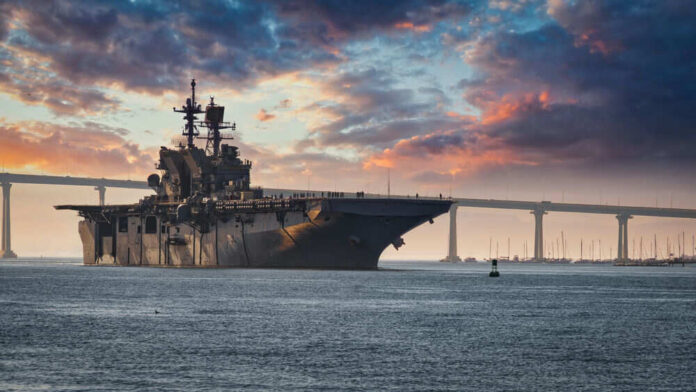
(ProsperNews.net) – After years of delays and cost pressure, the Navy just sent its next 100,000-ton supercarrier to sea to prove the high-tech systems that critics say must work before America bets deterrence on them.
Story Snapshot
- USS John F. Kennedy (CVN-79), the second Ford-class carrier, left Newport News Shipbuilding under its own power on Jan. 28, 2026, to begin initial builder sea trials.
- The trials are designed to validate major systems including propulsion, the Electromagnetic Aircraft Launch System (EMALS), Advanced Arresting Gear (AAG), and Advanced Weapons Elevators (AWE) ahead of delivery now planned for March 2027.
- Delays have stretched the build-to-sea-trials timeline to roughly 11 years, with COVID-era impacts and mandated requirements—such as F-35C-related integration—cited as contributing factors.
- The ship is expected to become the first Ford-class carrier homeported on the U.S. West Coast at Naval Base Kitsap-Bremerton, shifting more carrier capacity closer to the Pacific theater.
Builder Sea Trials Begin for USS John F. Kennedy
Huntington Ingalls Industries’ Newport News Shipbuilding sent USS John F. Kennedy (CVN-79) out on Jan. 28, 2026, marking the start of manufacturer sea trials for the second Gerald R. Ford-class aircraft carrier. The ship’s departure under its own power is more than a photo-op: it is the first major open-water test cycle intended to prove core ship functions before the Navy begins its own acceptance process.
HII has described the underway period as a milestone focused on verifying “important ship systems,” with the early trial phase aimed at confirming performance and stability in real operating conditions. Public reporting and statements indicate the builder will test propulsion and shiphandling at sea while also pushing the integrated technologies that distinguish the Ford-class from the older Nimitz design. Trial duration and specific performance results have not been publicly detailed.
What Makes CVN-79 Different—and Why Testing Matters
USS John F. Kennedy is a 1,092-foot, roughly 100,000-ton nuclear-powered supercarrier designed around major technology changes, including EMALS catapults that replace steam and an updated recovery system through Advanced Arresting Gear. The ship’s design also includes Advanced Weapons Elevators intended to move ordnance faster and more efficiently from below-deck magazines to the flight deck, supporting higher sortie generation in a fight.
Those innovations have also been the source of skepticism because the lead ship, USS Gerald R. Ford, faced widely reported reliability shortfalls in several of the same areas. Publicly available reporting notes that EMALS and AAG performance fell below target metrics on the first-in-class ship, and that Ford’s final weapons elevator was installed years after the ship entered service. Builder sea trials for CVN-79 therefore function as a reality check on whether those early problems were truly corrected.
Delays, Mandates, and the Price Tag Taxpayers Keep Seeing
CVN-79’s timeline underscores how hard it has become to deliver big-ticket defense platforms on schedule. Reporting places early construction activity as far back as 2011, with the keel laid in 2015 and the ship launched in 2019. The first trip to sea for builder trials did not happen until January 2026—about 11 years from the earliest build milestone often cited—longer than the lead ship’s path to sea.
Delivery has been pushed to March 2027 after earlier targets, with reporting attributing delays to pandemic-era disruptions and required work connected to integrating capabilities Congress demanded. The cost figure repeated in public reporting sits around $13.2 billion, a reminder that oversight is not an abstract talking point—it is the only protection taxpayers have when programs slip. Builder trials do not end the debate; they start the most important phase: proving the systems work.
Pacific Posture and the West Coast Homeport Plan
Strategically, the Navy’s plan to base the first West Coast Ford-class carrier at Naval Base Kitsap-Bremerton is a major signal about priorities. Moving advanced carrier capacity closer to the Pacific shortens transit time and can increase day-to-day presence where rival militaries are most active. Reporting also notes infrastructure work at Kitsap, including major electrical upgrades, to support the demands of a nuclear-powered supercarrier and its pier-side requirements.
100,000 Tons of New Carrier Muscle: The U.S. Navy’s Most Powerful Supercarrier Ever Is Now Underway for Sea Trialshttps://t.co/TopFigyLBj
— Harry Kazianis (@GrecianFormula) January 30, 2026
Even with that strategic logic, key uncertainties remain. Public timelines vary on when CVN-79 will be commissioned and fully operational after delivery, and builder sea trials are only one step before Navy acceptance trials and post-delivery work. The more conservative takeaway is straightforward: this is a necessary milestone, not a mission-ready declaration. The ship now has to demonstrate that America’s most expensive carrier technologies perform reliably at sea.
Sources:
USS John F. Kennedy Begins Sea Trials
Second Gerald R. Ford-class aircraft carrier set sails for sea trials
Newest Ford-class carrier USS John F. Kennedy heads to sea for testing
US Navy’s New Ford-Class Carrier Sailing for Builder Sea Trials
USS John F. Kennedy begins sea trials as Navy prepares to bring newest aircraft carrier online
USS Gerald R. Ford CVN-78 History
Copyright 2026, ProsperNews.net