(ProsperNews.net) – President Trump’s push to “Venezuela-ize” Iran—toppling a hostile regime without a U.S. occupation—now faces its hardest test as missiles fly, civilians die, and no uprising materializes.
Story Snapshot
- U.S. and Israeli strikes escalated into a fast-moving regional conflict after an Israeli operation killed Iran’s Supreme Leader Ayatollah Ali Khamenei.
- Trump publicly urged Iranians to seize a rare opening to replace their rulers, aiming for a rapid regime disruption like Venezuela’s 2026 collapse—without U.S. ground troops.
- Iran retaliated against U.S. interests and the region, with reports of expanding missile impacts beyond Iran’s borders and heavy civilian casualties.
- Analysts caution Iran’s security apparatus is stronger than Venezuela’s, and the U.S. end-state remains less defined than the Venezuela playbook.
Strikes, retaliation, and Trump’s bet on internal revolt
Late February strikes by the U.S. and Israel set the current trajectory, with reporting that an Israeli operation killed Iran’s Supreme Leader Ayatollah Ali Khamenei. President Trump followed by releasing a message urging Iranian citizens to “take over” their government, casting the moment as a narrow window created by military pressure and domestic hardship. Reporting also cited significant casualties early in the fighting, and retaliation that targeted U.S. bases and civilians.
Early March reporting described the conflict entering its sixth day with U.S. and Israeli forces maintaining air superiority while Iran continued launching missiles and drones. The fighting’s geographic footprint widened, with reported impacts in places such as Azerbaijan and Bahrain. Despite Trump’s public call for regime change from within, available reporting indicated no major popular uprising had yet taken hold, and protests were being suppressed.
Why the “Venezuela model” looks simpler on paper than in Tehran
The administration’s approach draws comparisons to Venezuela, where a U.S.-backed operation in 2026 helped force Nicolás Maduro out and set the stage for a managed transition. That precedent matters because it offered something Washington often lacks in regime-collapse scenarios: a relatively clear sequence of actions and a defined post-crisis pathway. In Iran, reporting emphasized there is no announced successor plan, no U.S. occupation plan, and no guarantee that public anger can overcome a hardened security state.
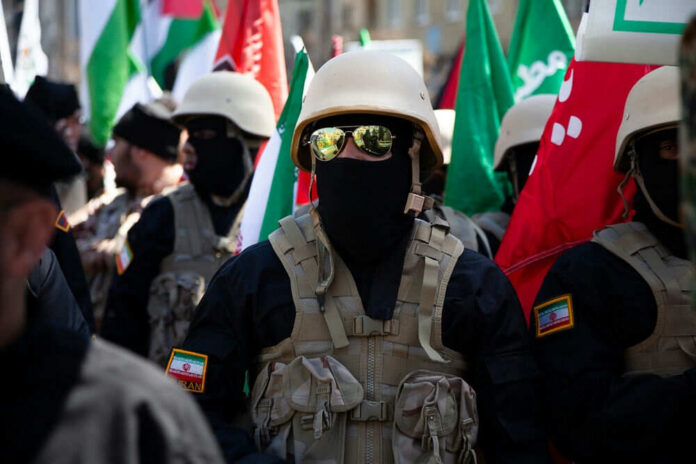
Several analysts cited in coverage argued that Iran’s internal controls—its paramilitary capacity and institutional resilience—make it far less susceptible to the kind of rapid elite fracture seen in Caracas. That does not mean Tehran is stable or popular; it means coercive capacity can delay or crush visible revolt even when the economy deteriorates. The resulting gap is strategic: military strikes can destroy missiles and facilities, but they do not automatically produce legitimate governance on the other side.
The administration’s stated goals—and the disputed threat picture
In public explanations, Trump framed the strikes as necessary to eliminate capabilities that could threaten Americans, describing Iranian missiles as a potential danger to the U.S. homeland. Reporting noted that aspect of the threat assessment has been contested or described as unproven in the available public record. Defense leaders also outlined concrete operational targets—such as degrading missile forces, naval assets, and pathways to nuclear weapons—while presenting the campaign as a way to deter terrorism and prevent a nuclear-armed Iran.
For conservative voters who remember decades of “forever war” talk followed by mission creep, the key factual distinction in current reporting is the emphasis on no Iraq-style invasion. That restraint aligns with a limited-footprint doctrine, but it raises a practical question the coverage repeatedly surfaced: what happens if airpower achieves tactical success but Iran’s ruling apparatus endures? Without clarity on an off-ramp or political endpoint, pressure can turn into open-ended conflict even without troops on the ground.
Public skepticism, allied concerns, and the constitutional gravity of escalation
Political risk at home is also visible. One report cited polling indicating a majority of Americans opposed the strikes, reflecting public fatigue with Middle East entanglements and doubts about defined objectives. Abroad, coverage described allied anxiety about the lack of a long-term vision, alongside condemnations or warnings from Iran’s partners such as China and Russia. Those reactions do not determine U.S. policy, but they shape the diplomatic terrain and the odds of a contained confrontation.
Talk or Tomahawks: Trump Wants to Turn Iran Into Venezuelahttps://t.co/ZCS20xWjc1
— 19FortyFive (@19_forty_five) March 6, 2026
Strategically, the story is a reminder that decisive action abroad quickly intersects with constitutional and accountability questions at home. The reporting underscores a campaign being justified on national security grounds while the end-state remains debated among experts and observers. That debate matters for Americans who prioritize limited government and clear authorization for major military commitments: when objectives are narrow, oversight is simpler; when objectives shift toward regime change, the stakes—and the need for clarity—rise sharply.
Sources:
Why Trump’s Iran regime gamble is different than Iraq and Venezuela
Iran is not Venezuela as much as Trump wants it to be
Copyright 2026, ProsperNews.net