
America’s first combat use of robot attack boats against Iran’s main naval port just pushed the long, quiet fight over the Strait of Hormuz into a new and far more automated phase.
Story Snapshot
- The United States used three Corsair sea drones to hit Iran’s Bandar Abbas naval base, in the first combat use of American naval drones.
- U.S. Central Command says the strike targeted a submarine and ship repair site used to threaten commercial shipping near the Strait of Hormuz.
- The Pentagon frames the attack as “self-defense” after Iranian strikes on tankers, while Iran calls earlier U.S. strikes a ceasefire violation.
- The move deepens worries on both left and right about endless wars run by distant elites with new, less accountable weapons.
What the United States Hit at Bandar Abbas
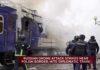
U.S. Central Command said three Corsair unmanned surface vessels slammed into a submarine and ship maintenance facility at Iran’s Bandar Abbas naval base on Sunday. The base sits just north of the Strait of Hormuz, the narrow chokepoint through which a large share of the world’s oil passes. Military officials released video showing small sea drones racing toward the port, then a pier erupting in flame and sparks at the moment of impact. The Pentagon called the operation “successful” and said it degraded Iran’s ability to threaten commercial ships.
Reporters describe Bandar Abbas as a key hub for Iran’s smaller submarines and other vessels used in “gray zone” harassment at sea. The strike focused on a repair site, not civilian docks or housing, which U.S. officials say shows they aimed at military capability, not the city itself. Early accounts from satellite imagery and open-source analysts point to serious damage at the pier area and to at least one “midget” submarine in dry dock. Iran has not released its own detailed damage report yet.
Why Washington Says the Strike Was Necessary
The sea drone attack did not come out of nowhere. It followed weeks of back-and-forth blows between Iran and the United States tied to attacks on tankers and warships near the Strait of Hormuz, even after both sides signed a June 17 understanding meant to cool things down. U.S. officials say Iran used one-way attack drones against commercial ships and moved to lay mines and launch more drones from its southern coast. Washington answered with waves of air and missile strikes on radar, drone, and missile sites from Sirik to Qeshm Island.
In that pattern, commanders framed the Bandar Abbas operation as one more “self-defense” strike to protect shipping and U.S. forces. They argue that hitting a submarine support hub reduces Iran’s ability to stalk tankers and to pressure global oil flows for leverage. This fits a longer U.S. approach many Americans now know too well: respond to low-cost Iranian attacks with high-tech strikes, claim narrow goals, and hope to prevent a wider war. Critics on both left and right worry this logic keeps America in a forever crisis, with no clear end state and little real say for ordinary citizens.
A First: Sea Drones Make Naval Warfare More Remote
The Bandar Abbas attack also marked a clear turning point in how wars are fought. U.S. Central Command confirmed it was “the first time American forces have employed sea drones in combat operations.” The Corsair, built by Texas-based Saronic Technologies, is about 24 feet long, can sprint near 35 knots, and can carry a payload of several hundred to around one thousand pounds over hundreds of miles. In plain language, these are fast, remote-controlled or autonomous robot boats packed with explosives.
For Pentagon planners, this kind of weapon looks like a dream. It risks no U.S. crew, can sneak into tight waters, and can be built far cheaper than a destroyer or submarine. For many citizens, though, it raises old questions in a new form. If wars can be fought by push-button from safe bases, will Washington be even more willing to strike, without debate in Congress or clear limits? Some conservative voters see this as one more way the “deep state” keeps power, with elite technocrats deciding on shadow wars while Main Street deals with higher fuel prices and instability.
Iran’s Reaction and the Risk of a Wider Spiral
Iran has repeatedly condemned recent U.S. strikes, calling them a “gross violation” of a fragile ceasefire and warning of harsher responses. After earlier U.S. attacks near Bandar Abbas, Iran’s Islamic Revolutionary Guard Corps claimed it fired on a U.S. airbase used in those operations and later said it shot down an American drone over the city, though Washington has not confirmed that claim. State media now frame the sea drone strike as proof that the United States will not honor deals when it thinks force can change facts on the ground.
U.S. Central Command utilized three Corsair unmanned surface vessels to strike a submarine and ship maintenance facility at the Bandar Abbas naval base in Iran
Sea drones strike Iranian port in combat first for US https://t.co/weaCYmcSKP
— Heather in KY (@heatherinky) July 15, 2026
This tit-for-tat cycle matters far beyond the Gulf. Every time oil shipping is threatened, families in the United States feel it in higher gas and energy prices, which stack on top of existing inflation and wage pressure. Many liberals see another danger as well: a drift toward high-tech, remote war that can blur lines of accountability and increase civilian risk, especially if targeting ever expands beyond clearly military sites. On both sides, people worry that unelected security officials and defense contractors benefit most while regular Americans and Iranian civilians carry the cost.
What This Reveals About Power, Technology, and the Public
The Bandar Abbas operation shows how quickly the rules of conflict can change without a real public conversation. A few years ago, sea drones were mostly a Ukraine story. Now American forces are using similar tools to hit a nuclear-armed regional power’s main naval port, under a “self-defense” label that many citizens struggle to track across shifting headlines. The legal and moral questions are complex, but the trend line is simple: more automation, more secrecy, and more decisions made far from voters’ daily lives.
Many conservatives see this as tied to a broader pattern of globalism and endless military spending that never seems to secure the border or fix problems at home. Many liberals see a deepening divide between elites who run policy and communities that live with the economic and human fallout. The sea drones at Bandar Abbas are not just a new weapon. They are a warning that power is moving even further away from ordinary people, at the exact moment when trust in government is already near the breaking point.
Sources:
realcleardefense.com, stripes.com, reuters.com, defensehere.com, ynetnews.com, newatlas.com, gulfnews.com, wsj.com, bbc.com, trtafrika.com, newsmax.com
© prospernews.net 2026. All rights reserved.