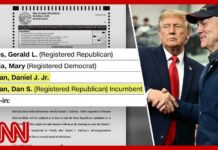

A federal lawsuit, a governor’s probe, and a same-name candidate now threaten to shake Alaska’s Senate race and voter trust.
Story Snapshot
- The Justice Department sued to block certification if voter confusion sways Alaska’s Senate result.
- A New York Times report says Democratic allies pushed a second Daniel Sullivan onto the ballot.
- Alaska’s governor ordered an investigation into how two “Dan Sullivans” ended up on the ballot.
- Mary Peltola and Daniel J. Sullivan deny any scheme or coordination to trick voters.
What Sparked The Uproar In Alaska’s Senate Race
Reports say aides to Mary Peltola and national Democratic staff helped recruit Daniel J. Sullivan, a retired teacher, to run against Senator Dan S. Sullivan. The move put two candidates with the same name on a ranked-choice ballot. The New York Times cited texts, documents, and a dozen sources to describe the effort, though the materials have not been publicly released in full. Early voting had already begun, raising fears that confusion could spread before facts were sorted.
The United States Department of Justice filed a lawsuit before Election Day. The suit asked a court to halt certification only if Senator Sullivan lost and proof showed confusion affected the outcome. That limited request is unusual and leaves key facts to be proven later. Still, it placed the federal government’s weight behind claims that the namesake candidacy could mislead voters.
How Alaska Officials And Campaigns Responded
Alaska Governor Mike Dunleavy ordered an investigation into the two Sullivans on the ballot after the Times report. State officials faced pressure to explain how the candidate qualified and how ballots were designed. The governor’s action created a formal record to test the claims. Alaska also challenged the federal case, arguing the government lacked a valid legal basis to interfere before votes were counted.
Mary Peltola rejected the allegation that she or her campaign tried to trick voters. She said she only knew about herself and the incumbent and stated she was not interested in misleading anyone. Daniel J. Sullivan said he had no contact with Peltola’s team and was not recruited by Democrats, saying “Zero, none, zilch”. Campaign and party statements echoed those denials and called the claims a distraction.
Why Voter Confusion Claims Matter Under Ranked Choice Voting
Alaska uses ranked choice voting, which can soften the effect of spoilers. But same-name candidates can still cause mistakes if voters skim or misunderstand labels. Past races in other states saw attempts to use name similarity to sway outcomes. Washington’s 2024 attorney general race featured two added “Bob Fergusons,” who later withdrew under a state rule against intent to confuse voters. Alaska lacks a clear final ruling here, so facts will steer any remedy.
The core problem goes beyond one race. Voters across parties worry that insiders game the system while regular people pay the price. If operatives did recruit a namesake to peel votes, that feeds the belief that elections are a playground for the well connected. If the claims fall apart, the rush to court still shows how quickly leaders use legal tools in ways that can deepen distrust. Either way, the process looks tilted to too many Americans.
What To Watch Next: Evidence, Ballot Design, And Impact
Courts and investigators must test the evidence the Times described. Key items include messages, money trails, and who approved what. Alaska’s ballot shows “Sullivan, Dan S.” with “Incumbent” and party notes, which may cut confusion, but we lack solid data on voter errors in this contest. Without surveys, affidavits, or transfer analysis, no one can say how many votes, if any, were miscast. That gap will shape any court order or reform push.
Sources:
pjmedia.com, nytimes.com, cnbc.com, upi.com, poynter.org, adn.com, yahoo.com, abcnews.com, newsnationnow.com, washingtonexaminer.com, bbc.com, abc27.com, nbcnews.com, galvnews.com
© prospernews.net 2026. All rights reserved.