
prospernews.net — Federal prosecutors say the suspect tried to assassinate President Trump at the Correspondents’ Dinner—and the quick-trigger response by the U.S. Secret Service kept a catastrophe from unfolding. [3]
Story Highlights
- Justice Department charged the suspect with attempting to assassinate the president, signaling the gravity of the attack. [3]
- Secret Service reported the president, first lady, and other protectees were safe; the incident remains under investigation. [1]
- A Secret Service officer was struck in the chest but protected by a ballistic vest, limiting injuries. [4]
- Officials evacuated the venue within minutes and arrested the suspect at the scene. [2][3]
Charging Documents Frame a Direct Threat to the President
The Department of Justice stated it charged a named suspect with attempting to assassinate the President of the United States, along with firearms offenses, following gunfire near the screening checkpoint for the White House Correspondents’ Dinner. The charging language establishes how seriously the government viewed the incident and underscores that the target was the sitting president. The complaint describes the suspect pushing through a magnetometer while armed before being stopped by responding officers and agents, who arrested him on site. [3]
The United States Secret Service said it coordinated with the Metropolitan Police Department and confirmed the president and first lady were safe, along with all protectees, while investigators processed the scene. That message of control matched real-time evacuations reported from the venue. Together, the formal charging posture and the protective detail’s update show a serious attack that was nevertheless contained at the perimeter before it breached the protected area where the president and other officials were gathered. [1]
Inside the Response: One Officer Hit, Shooter Stopped at Checkpoint
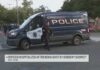
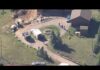
Justice Department documents detail a rapid sequence: an approach to a security checkpoint, a run through the magnetometer with a long gun, a Secret Service officer struck once in the chest, and immediate return fire ending with an arrest on scene. Subsequent reporting and footage from the aftermath show the area locked down and secured as guests were moved out. The wounded officer’s ballistic vest appears to have prevented a grave injury, which officials said limited the harm despite the close-range exchange. [3][2][4]
President Trump later praised the agents and officers, calling the response effective and describing the attacker as acting alone based on what officials briefed at the time. While that assessment fits the emerging case narrative, authorities have not yet released the full incident timeline, body-camera video, or ballistics analysis. For now, the public record reflects strong initial facts about the stop and arrest, paired with unanswered technical questions that will be addressed through continuing investigation and court proceedings. [4][3]
What We Know—and What Still Needs Independent Verification
Officials and contemporaneous coverage agree on several points: protectees were safe and evacuated, one officer was hit but protected by body armor, the shooter was taken into custody immediately, and the ballroom was cleared within minutes. Those facts support the description of a fast, disciplined protective action that did not allow the threat to penetrate the secure zone. However, the precise number of shots, weapon specifics, and a complete path-of-travel map remain undisclosed in public materials. [1][2][3][4][6]
Conservative readers value accountability without theater. Here, prudence means pressing for the full Federal Bureau of Investigation affidavit attachments, the United States Secret Service after-action report, and ballistic and medical documentation that confirm distances, angles, and the vest’s performance. That transparency will validate the early narrative and strengthen deterrence, while exposing any fixable gaps. Institutional incentives often prioritize quick reassurance over granular disclosure; strong oversight ensures lifesaving tactics are protected but failures are not buried. [3][1]
Security Lessons for a High-Risk Era
The incident highlights the modern threat profile facing high officials: a single determined attacker can race a checkpoint and force a gunfight within seconds. The protective mission depends on layered standoff, working magnetometers, disciplined access control, and agents prepared to neutralize lethal force immediately. This case shows those layers largely worked; the shooter was stopped and arrested at the perimeter, and the event did not become a mass-casualty attack inside a crowded ballroom. The officer’s armor performance underscores the value of first-rate equipment. [3][4]
🚨White House lockdown shocker : watch epic Gunshot reaction
During a reported shooting near the White House, NBC News correspondent Julie Tsirkin was on air when she heard the gunfire.
Her immediate reaction: “It sounds like fireworks.”
The moment has drawn significant… pic.twitter.com/IwBP9EEAUy
— Ramesh Tiwari (@rameshofficial0) May 24, 2026
For families who expect government to defend life and liberty without eroding constitutional rights, the path forward is clear: demand facts, fund training and first-rate gear, and resist performative security that ignores real vulnerabilities. The Justice Department’s charges and the United States Secret Service’s operational success point to a system that held under stress. Full document releases and a meticulous timeline will close the loop, ensuring lessons learned translate into even tighter protection around the presidency. [3][1][4][2]
Sources:
[1] Web – 2026 White House Correspondents’ Dinner shooting – Wikipedia
[2] Web – Photos: The aftermath of the White House Correspondents’ Dinner …
[3] Web – Suspect in White House Correspondents’ Dinner Shooting Charged …
[4] YouTube – How the shooting incident at White House correspondents’ dinner …
[6] YouTube – The aftermath of the shooting event at the Correspondent’s Dinner
© prospernews.net 2026. All rights reserved.