
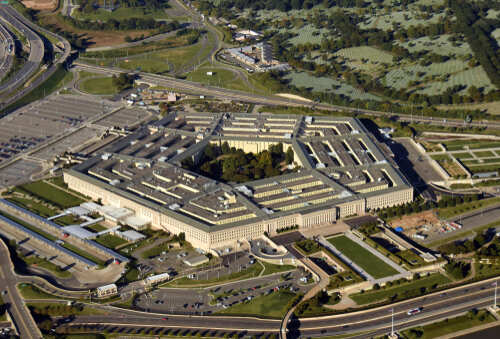
(ProsperNews.net) – Eight hundred of America’s most powerful generals and admirals will soon gather behind closed doors in Virginia, and not a single person outside the Pentagon’s inner sanctum knows exactly why.
Story Snapshot
- US Defense Secretary Pete Hegseth has summoned 800 top generals and admirals for an emergency in-person meeting, an event with no clear precedent in modern US military history.
- The meeting follows months of massive leadership changes, deep Pentagon cuts, and persistent rumors of looming military action.
- Neither the agenda nor the true purpose of the gathering has been disclosed, fueling speculation about U.S. intentions and the stability of its military command.
- The Trump administration’s shake-up of Pentagon leadership and policies has left both allies and adversaries scrutinizing the Pentagon’s next move.
Hegseth’s Emergency Summit: The Pentagon’s Biggest Gathering in Decades
US Defense Secretary Pete Hegseth has issued a sweeping order: nearly 800 senior generals and admirals must assemble in Virginia next week for a meeting described by Pentagon insiders as “unprecedented.” This is not a routine military confab. The attendees are the commanders whose decisions could alter the course of history, each responsible for thousands of troops and billions in hardware. Never in recent memory has such a gathering been called in person, bypassing secure video links that have become standard even at the highest echelons. The Pentagon’s silence on the agenda has only amplified tension in defense circles and beyond.
The last time anything remotely similar happened, America was on the brink of war, or undergoing seismic shifts in strategy. Yet, this time, the context is even more fraught. Hegseth’s tenure has been marked by a campaign of rapid-fire reforms: in February, he dismissed the chairman of the Joint Chiefs of Staff and five other top military leaders. In May, he slashed the ranks of four-star officers by 20 percent. These moves, unprecedented in their speed and scope, have left traditional Pentagon power structures in disarray. Now, as the generals and admirals prepare to converge in Virginia, the question lingers: What comes next?
Chaos, or Calculated Strategy? The Context Behind the Call
Hegseth’s emergency meeting arrives after months of internal upheaval. The Pentagon’s leadership structure has been upended, with traditional lines of authority disrupted. Hegseth has openly criticized and dismantled diversity programs, arguing they divide the armed forces. His stated aim: streamline command and eliminate what he calls “political distractions.” Critics argue these moves risk morale and readiness; supporters claim they restore discipline and unity. Meanwhile, Vice President JD Vance has downplayed the drama, calling the gathering “not unusual at all”, a claim met with skepticism by Pentagon correspondents who say they’ve “never seen anything like it in 30 years.”
The meeting’s format is almost as shocking as its scale. In an era of encrypted video and digital briefings, bringing this many high-ranking officers together physically is virtually unheard of outside times of war. This raises the stakes: Is this about projecting unity, preparing for conflict, or reasserting civilian control over a military in flux? With the Trump administration’s clear appetite for rapid institutional change, allies and adversaries alike are watching for signals of what the American military is planning.
Inside the Pentagon’s Power Shift: Winners, Losers, and the Waiting Game
The power dynamics within the Pentagon have shifted dramatically. Hegseth now holds sweeping authority over appointments, policy, and the future direction of the armed forces. The mass firings and reductions in senior leadership have consolidated influence at the very top, leaving hundreds of generals and admirals uncertain about their futures. The administration’s message is clear: the military must adapt to new priorities, or face further upheaval.
For the rank and file, the stakes are high. Command structures have been disrupted. Operational readiness could be at risk if uncertainty persists. International partners are reassessing their own strategies, wondering if America is preparing for a new era of military assertiveness, or internal consolidation. The defense industry, too, is bracing for changes in spending priorities and leadership focus. The only certainty is that nothing about this moment is business as usual.
Rumors, Reforms, and the Unanswered Question: What Happens Next?
No clear consensus has emerged on the true intent behind this unprecedented meeting. Some analysts suggest it signals preparations for major military action, perhaps even war. Others believe it’s the final act in Hegseth’s campaign to cement control and silence dissent. The administration insists it is “routine,” but the sheer magnitude and secrecy have left even veteran Pentagon reporters and international observers guessing.
The impact of this summit will be felt far beyond the walls of the Virginia conference rooms. In the short term, anxiety among military leadership and their commands is palpable. In the long term, the Pentagon may emerge more centralized, less constrained by traditional norms, and poised for unpredictable new directions. For now, all eyes remain fixed on the Pentagon’s closed doors, waiting for the next move in a drama that could reshape American power for years to come.
Copyright 2025, ProsperNews.net