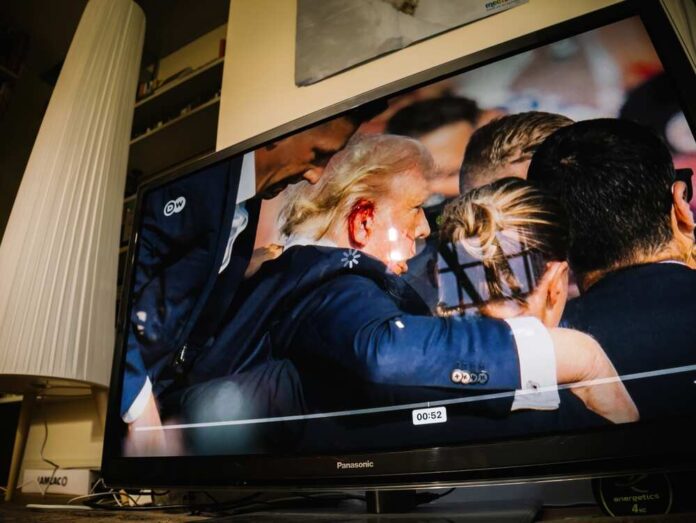
(ProsperNews.net) – Secret Service brass sat on explosive threat intelligence for 10 days before the Butler assassination attempt, yet somehow, the agents assigned to protect Trump were left in the dark, now six agents are suspended, a director has resigned, and the American public is asking: how many more “classified” warnings are we not being told about?
At a Glance
- Secret Service received “classified threat” intel 10 days before Butler rally but failed to alert the Trump detail
- Assassination attempt left Trump wounded, one supporter dead, two others injured; shooter killed by countersnipers
- Six agents suspended, director Kimberly Cheatle resigned, agency promises reforms but no firings
- GAO report and congressional oversight reveal major intelligence sharing failures and operational breakdowns
Secret Service Sat on Threat Before Butler Rally, Trump Detail Never Warned
The Secret Service, whose core job is to protect presidents and candidates, received classified intelligence about a credible threat to Donald Trump a full 10 days before the attempted assassination in Butler, Pennsylvania. The mind-blowing part? The agents tasked with protecting Trump, out there in the field, standing between him and danger, were never told about it. Instead, the intel was kept within the upper echelons of the agency. As a result, on July 13, 2024, Thomas Matthew Crooks perched himself on an unguarded rooftop, took aim at Trump, and fired. Trump narrowly survived, grazed in the ear. But firefighter Corey Comperatore was killed, and two others were wounded before the shooter was finally taken down by Secret Service snipers.
This isn’t some minor slip-up. This is the most catastrophic failure in Secret Service protection since the Reagan era. The GAO report, released just weeks ago, lays it out in black and white: senior officials got the threat, didn’t pass it down, and agents on the ground paid the price. No wonder the public is seething. No wonder Congress is breathing down the agency’s neck. When “classified” becomes a synonym for “sit on your hands,” who’s actually being protected? Because it sure isn’t the guy wearing the bullseye.
Leadership Out, Agents Suspended, But No One Fired
Six agents, ranging from supervisors to field operatives, have been suspended without pay for 10 to 42 days for their roles in the Butler fiasco. Yet, despite the gravity of the breach, not a single person has been fired. Instead, some were quietly reassigned to less sensitive roles. The top boss, Director Kimberly Cheatle, did resign, but only after intense pressure, and a full 10 days after the attack. The agency claims it’s laser focused on “fixing root causes,” but the lack of real accountability sticks in the craw of anyone who believes in actual consequences. If this had happened in the private sector, heads would roll, not shuffle to a new cubicle.
The Secret Service has since rolled out reforms: military-grade drones, mobile command posts, and promises of better coordination with local law enforcement. Deputy Director Matt Quinn says Butler was “an operational failure” and swears it’ll never happen again. But the American people have heard this song before. After every high-profile government failure, from Benghazi to the border, bureaucrats promise improvement, only to repeat the same old mistakes. The only thing that seems to change is the PR spin.
Congress, GAO, and the Infuriating Pattern of Bureaucratic Failure
The independent GAO report, released at the urging of Sen. Chuck Grassley, details a culture of “bureaucratic, complacent, and static” leadership at the Secret Service, which failed to adapt as threats evolved. Intelligence about Crooks was never communicated to Trump’s detail or local law enforcement in Butler. The result: a shooter with a drone, a rifle, and a clear shot at a presidential candidate. The agency’s failures have prompted a round of congressional hearings and new oversight measures. Grassley and others are pushing for reforms in how threat intelligence is shared, not just within the Secret Service but across federal and local agencies.
For the families of the victims, for Trump’s supporters, and for anyone who believes in the rule of law, the question remains: how many more “classified” warnings are being filed away while Americans are left exposed? The Secret Service’s job is not to protect its own reputation, but the lives of those under its care. Until the agency proves it can do that, without hiding behind red tape, trust will remain in tatters.
Copyright 2025, ProsperNews.net