
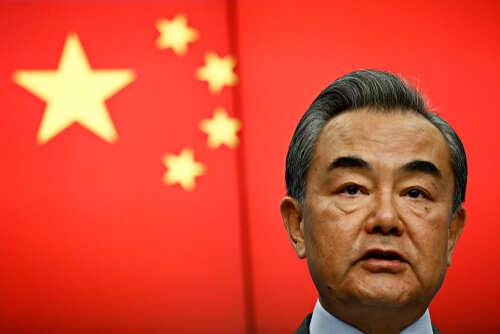
(ProsperNews.net) – Rubio’s rumored face-off with China’s top diplomat at the ASEAN summit could set the tone for U.S.-China relations and shift the global balance of power, if only common sense prevails over diplomatic doublespeak.
At a Glance
- Rubio is reportedly working on a potentially pivotal meeting with Chinese Foreign Minister Wang Yi at ASEAN in Malaysia.
- Tensions are high thanks to new U.S. tariffs, ongoing disputes over Taiwan and the South China Sea, and China’s support for Russia.
- This would be Rubio’s first in-person encounter with Wang Yi as Secretary of State and National Security Adviser.
- ASEAN nations are stuck in the crossfire, trying to avoid getting steamrolled by the U.S.-China rivalry.
- The outcome could reverberate across global markets, supply chains, and America’s allies in Asia.
Rubio’s ASEAN Gambit: A Test of American Resolve in Asia
Secretary of State Marco Rubio’s approach to China has never been subtle, and now he’s poised to bring his signature style straight to the heart of Asia’s diplomatic battleground. With the ASEAN Foreign Ministers’ Meeting underway in Malaysia, all eyes are on whether Rubio will finally meet face-to-face with Chinese Foreign Minister Wang Yi. This is more than a handshake photo-op, it’s the first live confrontation since Rubio’s appointment, following years of calling out Beijing’s abuses, expansionism, and its not-so-secret love affair with Putin’s Russia. The stakes could not be higher for American interests, regional allies, and anyone who values constitutional sanity over globalist appeasement.
Tariffs are already roiling the region, thanks to President Trump’s renewed “America First” crusade. The U.S. has slapped new duties on Japan and South Korea, sending shockwaves through supply chains and giving ASEAN partners yet another reason to hedge their bets rather than pledge undying allegiance to Washington. If you’re a taxpayer tired of subsidizing the world while our own borders leak like a sieve, the spectacle of diplomats wringing their hands in Kuala Lumpur may seem like déjà vu. Yet, Rubio’s mere presence signals a possible break from the failed appeasement strategies of the recent past, assuming he doesn’t get bogged down in bureaucratic pleasantries and “dialogue” for dialogue’s sake.
ASEAN Caught in the Crossfire
ASEAN member states, caught between the world’s two largest economies, are watching with barely concealed exasperation. They want economic growth and regional stability, not to be used as pawns in a new Cold War. The U.S. is loudly reaffirming its commitment to a “free, open, and secure Indo-Pacific,” but actions speak louder than slogans. Asian allies, Japan, South Korea, Australia, are wary of America’s shifting moods, especially when tariffs hit their industries and the promise of security comes with a price tag. Meanwhile, China is quietly expanding its influence, building infrastructure, and dangling trade deals, while bullying neighbors over the South China Sea and Taiwan. No one wants to pick sides, but the room for fence-sitting is shrinking fast.
Against this backdrop, Rubio’s meeting with Wang Yi could either signal a new era of principled engagement or devolve into the usual diplomatic shadowboxing. The U.S. hopes to leverage its alliances and pressure China over its support for Russia’s war in Ukraine, but Beijing has so far shrugged off Western outrage. Rubio’s challenge is to make it clear that the U.S. won’t blink, or worse, cave, when confronted by a regime that respects only strength and clarity, not the mealy-mouthed platitudes that have too often passed for American foreign policy.
High Stakes for America, Its Allies, and the World
The global implications are enormous. If Rubio can force a real conversation on supply chain decoupling, technology theft, and the rights of America’s allies, it could start to unwind years of strategic neglect. If not, China will keep consolidating power, ASEAN will keep hedging, and the U.S. will keep footing the bill for a security architecture that’s increasingly taken for granted. Meanwhile, global markets watch every gesture, knowing that one misstep could send economic shockwaves across industries already battered by inflation, supply chain chaos, and endless government overreach.
Expert opinion is divided. Some see Rubio’s dual roles as Secretary of State and National Security Adviser as amplifying his hawkish instincts, potentially heightening tensions. Others detect a glimmer of pragmatism in his recent calls for “communication” and “conflict avoidance”, though whether this is the real Rubio or just diplomatic posturing remains to be seen. For the millions of Americans who’ve had it with elite incompetence and international freeloaders, the hope is that this time, the U.S. team shows some backbone and puts American interests first. If Rubio can pull that off, maybe, just maybe, ASEAN won’t be another stage for globalist theatre, but the opening act of a new era of American assertiveness.
Copyright 2025, ProsperNews.net