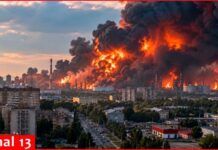
The Pentagon confirmed it pulled every U.S. bomber out of Britain’s RAF Fairford after police arrests and an alleged Iran-linked threat put the base on high alert.
Story Highlights
- The Pentagon said all U.S. bombers at RAF Fairford returned to the United States.
- Reports said at least 12 B-1 bombers were withdrawn in a rapid move.
- British leaders cited “strong indications” of an Iran link as police made arrests.
- Iran’s embassy strongly denied any role in the incident near the base.
Pentagon Confirms Full Bomber Exit From RAF Fairford
Pentagon officials said all U.S. bombers deployed to RAF Fairford have returned to their home bases in America. The statement followed a tense weekend near the airfield in Gloucestershire, England. U.S. officials framed the action as a force protection move tied to an active investigation. Several outlets reported that the withdrawal covered at least 12 B-1 Lancer bombers, underscoring the scale and speed of the decision to reduce risk while facts were still developing.
U.S. and British security planners treat RAF Fairford as a key hub for American bomber missions. The base has supported long-range operations and refueling plans. That role made the site a potential target for hostile actors. The decision to clear the flight line marked a rare, visible step to remove high-value assets from harm’s way. Officials did not describe detailed threats or tactics publicly, citing the ongoing probe and operational security rules for allied forces.
Police Arrests And Local Evacuations Trigger Major Response
British police arrested five men after reports of three suspicious vehicles near the base. Officers declared a major incident, set cordons, and evacuated dozens of nearby homes as bomb disposal teams assessed the area. Police said the case involved suspected terror and explosive offenses. The arrests drove a surge of protective actions around the base and the village. Authorities later released the men on bail, but stressed the investigation was active and still gathering evidence.
Local leaders balanced public safety with the need to avoid panic. Gloucestershire Police updated residents as cordons shifted and people returned home. Households faced disruption as investigators worked through scenes and vehicles. Fuel containers reportedly found by officers raised questions, but officials did not confirm explosive materials. In fast-moving cases like this, early facts can be narrow. That uncertainty often pushes commanders to act first to protect people and hardware, then refine the picture as evidence firmed up.
Iran Link Asserted By Officials, Denied By Tehran
United Kingdom officials, including Prime Minister Andy Burnham, said there were strong indications that Iran played a part in the suspected plot. Those statements shaped how the public understood the risk, even as detailed proof remained out of view. The claim echoed earlier security briefings that looked at foreign proxies and state support. Such early attributions are common in counterterror probes, where analysts weigh motives and patterns while evidence is still being tested.
The evacuation of all 12 B-1 Lancer bombers from RAF Fairford was driven by fears of a plot against the base, according to NYT.
U.S. officials believe a branch of Iran's Islamic Revolutionary Guard Corps recruited UK nationals to attack the bombers and kill personnel.
The plan… pic.twitter.com/D5392XHaTG
— Comandante🎖️ (@commandante_) October 4, 2026
Iran’s embassy in London forcefully denied any role and called the claims unfounded. Tehran said the reports fed “Iranophobia” and rejected links to the arrests. Several outlets noted the denial as the United Kingdom inquiry continued. With suspects on bail and few court filings public, the case sits in a familiar gray zone. Officials assert a state link, the accused are not charged with such ties yet, and the public sees only headlines and brief official lines rather than documents.
Why This Matters For Voters Tired Of Mixed Signals
This episode shows how national security decisions can move faster than public proof. Commanders pulled aircraft quickly to avoid a worst case. Police locked down a community to reduce risk. Leaders named a likely foreign hand before evidence reached court. That chain can leave citizens on both left and right feeling shut out. People see big actions that affect safety, money, and foreign policy, but they do not see the records that justify those actions in real time.
What To Watch Next As Facts Catch Up
Watch for three things: first, whether police or prosecutors file charges that detail methods, materials, and any foreign links. Second, whether defense lawyers or courts force more disclosure on why Iran was cited. Third, whether the Pentagon or the United States Air Forces in Europe release a threat assessment after the risk window closes. Clear records would help test the early claims and rebuild trust across a public weary of secrecy and spin in security cases.
Sources:
aljazeera.com, newsmax.com, bbc.com, apnews.com, bbc.co.uk, cbc.ca
© prospernews.net 2026. All rights reserved.