
(ProsperNews.net) – Washington’s next election fight is about a basic question: will the federal government require proof of citizenship to register to vote, or keep the door open to doubt and distrust?
Story Snapshot
- Rep. Anna Paulina Luna is pressing the Senate to pass the SAVE Act, warning she is willing to disrupt House business to force action.
- The SAVE Act would require proof of U.S. citizenship when registering to vote in federal elections.
- Luna has argued the bill only moves if it is attached to must-pass legislation, including reauthorizing key surveillance authorities.
- Senate Majority Leader John Thune has publicly pushed back, saying the votes are not there and the math does not add up.
- Claims circulating online about Luna urging primary challenges or a “Convention of States” are not supported by the provided reporting.
Luna Escalates Pressure on the Senate Over the SAVE Act
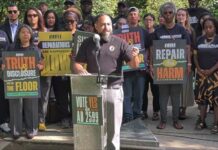
Rep. Anna Paulina Luna, a Florida Republican, has intensified her push for the Safeguard American Voter Eligibility (SAVE) Act by tying the Senate’s inaction to a willingness to bring House proceedings to a halt. Multiple reports describe Luna threatening to “shut down” the House floor if the Senate does not take up the measure. Her leverage argument is simple: if election integrity is urgent, Congress should treat it like urgent business.
The reporting provided does not substantiate viral claims that Luna called for primary challenges against “RINO” senators or advocated a “Convention of States” to bypass Congress. What is documented is a procedural pressure campaign centered on forcing a vote. For readers frustrated by years of institutional stalling and “do-nothing” politics, the factual record here is about tactics inside Congress, not a broader intraparty revolt.
What the SAVE Act Would Do and Why It’s a Flashpoint
The SAVE Act, as described in the supplied sources, would require proof of U.S. citizenship when registering to vote in federal elections. That policy goal has become a major conservative priority because election rules only work when the public believes they are enforced consistently. Supporters view citizenship verification as a straightforward guardrail, while opponents frame it as a barrier. The core fight is less about slogans and more about confidence in the voter rolls.
President Trump has urged passage ahead of the 2026 midterms, and at least one report notes he has suggested Congress should pause other work until the measure advances. That posture reflects a broader Republican governing argument in 2026: prioritize border security and election integrity over the kind of sprawling, unfocused legislating that defined much of the post-COVID spending era. The sources do not provide vote counts, but they do describe hardened partisan opposition.
The Procedural Strategy: Attach SAVE to Must-Pass Bills
Luna’s key tactical argument is that the SAVE Act will only pass if it is attached to must-pass legislation, including a reauthorization package connected to FISA authorities. The strategy is familiar in Washington: force members to take a combined vote rather than letting leadership bury a controversial item in committee or on the calendar. Supporters see that as realism in a Senate where standalone bills frequently die without ever reaching the floor.
That approach also invites a legitimate concern for constitutional conservatives: bundling major policy changes into must-pass packages can reduce transparency and accountability. Even when the policy aim is popular, governing through legislative “hostages” can normalize the kind of process that voters say they hate. The reporting shows Luna betting that the only route to enactment is procedural leverage, not a clean vote on the merits.
Thune’s Reality Check and the Senate Roadblock
Senate Majority Leader John Thune has rejected the push in blunt terms, arguing that the votes are not there and that “the math doesn’t add up.” Another cited line indicates skepticism about a “talking filibuster” path, underscoring that even if Republicans want a vote, Senate procedure and margins still matter. The sources also describe Democrats vowing opposition, suggesting the bill is headed toward a party-line showdown rather than a coalition compromise.
For conservative voters who watched years of loose enforcement, porous borders, and bureaucratic doublespeak, the larger takeaway is that election-policy fights are being routed into Senate procedure, not open debate. Based strictly on the research provided, the story is not about a “Convention of States” or primary threats; it is about a House member trying to force a recorded Senate decision on citizenship verification—while Senate leadership signals the votes are not there.
Sources:
Rep. Anna Paulina Luna threatens to shut down House if Senate doesn’t pass SAVE Act
Florida Rep. Luna says the only way the SAVE Act will be passed is if it’s attached to FISA
Trump doubles down SAVE America Act
Anna Paulina Luna, SAVE America Act, voter ID, citizenship, Trump
Copyright 2026, ProsperNews.net