(ProsperNews.net) – A former FBI director is now defending himself against federal threat charges over a beach photo—raising the kind of speech-versus-security question that can quickly become a political weapon in Washington.
Quick Take
- A federal grand jury in the Eastern District of North Carolina indicted former FBI Director James Comey over a social media image showing “86 47” spelled with seashells.
- Prosecutors argue the image amounted to a threat against President Donald Trump, interpreting “86” as a term meaning “kill” and “47” as a reference to Trump as the 47th president.
- Comey deleted the post and apologized, but the case is moving forward with two federal counts tied to threatening and transmitting a threat.
- Legal commentary cited in coverage questions whether the post meets the “true threat” standard required for conviction under federal law.
What the Comey indictment alleges—and why it matters
A grand jury indicted former FBI Director James Comey after a 2025 Instagram post showed seashells arranged as “86 47,” a combination Trump administration officials say implied violence toward President Donald Trump. The case matters because it targets ambiguous imagery rather than explicit language, forcing courts to decide what crosses the line into a prosecutable threat. That line shapes both public safety and First Amendment protections, especially in an era when political messaging is increasingly coded.
According to reporting, Acting Attorney General Todd Blanche characterized the post as a threat to the president’s life, and FBI Director Kash Patel publicly said Comey “allegedly threatened the life of the President.” Comey, for his part, removed the post and issued an apology. Even so, federal prosecutors proceeded with charges that put real prison time on the table, adding another flashpoint to the already bitter relationship between Trump’s team and prominent Obama-era officials.
The two federal counts and the “true threat” hurdle
Comey faces two counts: making a threat against the President of the United States and interstate transmission of a threat. Coverage of the case notes a sentencing discrepancy—some references describe up to five years per count, while other reporting says the indictment outlines exposure up to ten years. Regardless of the exact maximum, the legal test is demanding: prosecutors must prove the image qualifies as a “true threat,” not protected political expression, under federal statutes.
That “true threat” requirement is where the case gets difficult, because the post did not explicitly say “kill” or name Trump in text. The number “86” is widely debated: some view it as slang for getting rid of someone, while others argue it can be restaurant jargon or a nonviolent reference. In practical terms, a conviction usually depends on provable intent and context—what the speaker meant, how a reasonable person would understand it, and whether it conveyed a serious expression of harm.
Competing narratives: public safety vs. politicized enforcement
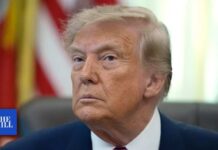
President Trump has publicly denounced Comey, calling him a “dirty cop” and “crooked,” and framing the incident as a serious threat rather than a misunderstanding. From a rule-of-law standpoint, the government has a duty to investigate credible threats to the president, no matter who makes them. At the same time, high-profile prosecutions tied to political speech can deepen public suspicion that enforcement is being applied selectively—fueling the bipartisan belief that elites face a different system.
Why this case hits a nerve across the political spectrum
Conservatives who believe the federal bureaucracy has long protected its own may see the indictment as overdue accountability for a powerful figure. Liberals who worry about America First-era law enforcement may see the prosecution as an attempt to criminalize criticism through aggressive interpretation. Those concerns can coexist because the underlying issue is trust: millions of Americans, left and right, increasingly suspect the justice system is influenced by status and politics instead of neutral standards applied evenly.
Retired Judge Andrew Napolitano, cited as a legal analyst, called the case “frivolous” and predicted dismissal, arguing Supreme Court precedent protects speech that falls short of a true threat. That assessment may or may not persuade the court, but it highlights the central question: if prosecutors can treat ambiguous symbolism as a felony threat, future administrations could use the same approach against activists, journalists, or ordinary citizens whose posts are provocative but not explicitly violent.
What to watch as the case proceeds
Comey appeared in court on April 29, 2026, without entering a plea, and his defense has signaled it will argue “vindictive” prosecution. The next key developments will likely include pretrial motions testing whether the indictment’s theory can survive First Amendment scrutiny and whether prosecutors can show intent beyond reasonable doubt. If the case is narrowed or dismissed, it could reinforce speech protections; if it advances, it could reshape how coded political messages are policed.
For voters already convinced the federal government prioritizes power over fairness, the political impact may arrive before any verdict. A prosecution that looks like a stretch could validate fears of selective enforcement. A prosecution that produces clear evidence of intent could validate concerns about political violence. Either way, the Comey case is a reminder that when trust in institutions collapses, even a photo of seashells can become a national fight over who gets presumed innocent—and who gets presumed dangerous.
Sources:
James Comey indictment DOJ Trump April 29
Copyright 2026, ProsperNews.net