
A magnitude 7.4 earthquake tore through western Colombia on Monday, sending at least 20 buildings crashing down in the city of Cali and trapping people inside the rubble.
Story Snapshot
- A 7.4-magnitude earthquake struck near San José del Palmar, Chocó, at a depth of about 107 kilometers.
- Cali’s mayor said at least 20 buildings collapsed, with residents trapped inside.
- Damage also hit Pereira, Manizales, and Quibdó, with rescue crews digging through debris.
- Death tolls varied widely across early reports, from 18 to more than 100, showing how fast-moving the crisis remains.
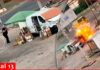
- Video from the scene shows a building partially collapsing as residents scramble to safety.
A Powerful Quake Hits the Pacific Coast
The United States Geological Survey and Colombia’s own geological service both recorded the quake at magnitude 7.4, striking Monday morning near the small town of San José del Palmar in the Chocó region. The shaking reached deep into western Colombia, rattling major cities like Cali, Pereira, and Manizales, and was even felt as far as the capital, Bogotá, and across the border in Ecuador.
Because the quake’s origin sat more than 100 kilometers underground, the shaking spread over a wide area instead of staying centered near the epicenter. That depth likely explains why cities far from San José del Palmar reported serious structural damage. Colombia’s geological service initially logged a lower reading before revising it upward to the final 7.4 figure, a common pattern in the first hours after a major seismic event.
Cali Buildings Come Down, Residents Trapped
Cali Mayor Alejandro Eder said at least 20 buildings collapsed across the city, with people trapped inside the wreckage. Videos circulating from the scene show a multi-story structure buckling and crumbling as dust fills the street, matching accounts from residents who described the ground shaking violently before walls gave way. Rescue teams moved quickly into the rubble to search for survivors.
Emergency crews also worked through debris in Pereira and Manizales, where officials confirmed additional deaths and injuries. Airports in the region temporarily suspended flights as authorities checked runways and terminals for damage. Local shelters opened for residents whose homes were destroyed or deemed unsafe to enter, while hospitals treated a growing number of injured patients.
Death Toll Estimates Remain in Flux
Early reports on the death toll varied sharply, ranging from at least 18 people in Pereira alone to figures above 100 nationwide as the story developed. This kind of swing is common in the chaotic first hours after a major disaster, when officials are still gathering reports from hard-hit areas and casualty counts change as rescue teams reach more locations.
https://twitter.com/TheLongView_R/status/2086939930605801643
What remains steady across nearly every report is the core picture: a powerful, deep earthquake struck western Colombia, buildings came down in multiple cities, and people were trapped and killed. The exact final numbers on deaths and damaged structures will likely take days or weeks to confirm as engineers inspect buildings and officials finish counting the dead and missing.
For now, the disaster underscores how quickly a natural event can overwhelm a region’s infrastructure and emergency systems, regardless of politics or preparation. Colombian officials face the same pressure test that governments everywhere face after a disaster: whether the response matches the scale of the damage residents are seeing with their own eyes.
Sources:
nytimes.com, cnn.com, earthquakelist.org, bbc.com, scmp.com
© prospernews.net 2026. All rights reserved.