

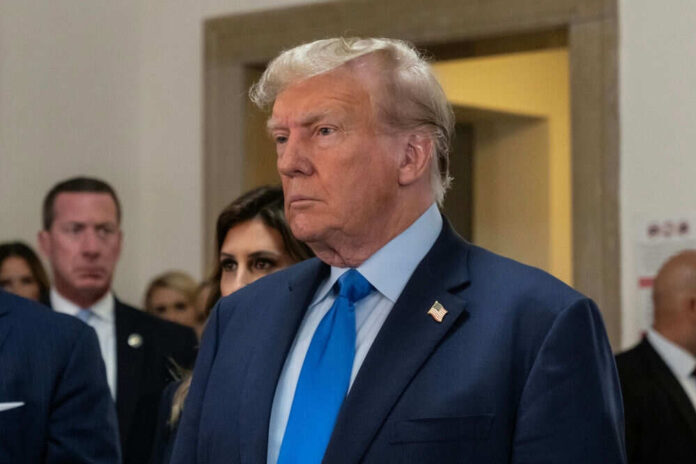
(ProsperNews.net) – The federal appeals court’s decision to uphold an $83.3 million judgment against Donald Trump for defaming E. Jean Carroll raises significant questions about presidential accountability and the limits of immunity.
Story Snapshot
- A federal appeals court upheld an $83.3 million defamation judgment against Trump.
- E. Jean Carroll accused Trump of sexual assault, which he denied, leading to the lawsuit.
- The judgment highlights the boundaries of presidential immunity and the Westfall Act.
- The case sets a precedent for holding public officials accountable for personal conduct.
Presidential Accountability in Question
A federal appeals court recently upheld an $83.3 million judgment against Donald Trump, stemming from a defamation lawsuit filed by E. Jean Carroll. Carroll, a former magazine columnist, accused Trump of sexual assault in the 1990s. Trump denied these allegations publicly, calling Carroll a liar and claiming he had never met her. These statements led Carroll to sue Trump for defamation, asserting that his remarks had damaged her reputation and career.
The legal battle between Carroll and Trump has been ongoing since Carroll filed the lawsuit in November 2019. The case reached a pivotal moment in January 2024, when a jury awarded Carroll $83.3 million in damages. Trump sought to appeal the decision, arguing that his statements were made in his official capacity as president, and therefore, the U.S. government should be substituted as the defendant under the Westfall Act. This attempt was denied by the Second Circuit Court of Appeals, which affirmed the judgment against Trump.
Legal and Political Ramifications
The case has garnered significant public attention due to the high-profile nature of the parties involved and the substantial damages awarded. It also raises important questions about the extent of presidential immunity and the rights of individuals to seek redress for defamation by public officials. The court’s decision to uphold the judgment against Trump emphasizes that even a sitting or former president can be held accountable for personal conduct and statements made outside of their official duties.
Legal experts have hailed the ruling as a landmark decision, reinforcing the principle that no one is above the law. The case also serves as a critical test of the Westfall Act, which provides immunity to federal employees for actions taken within the scope of their employment. By rejecting Trump’s arguments for substitution, the court clarified the limits of this immunity in cases involving defamation and personal conduct.
Implications for Future Litigation
The implications of this ruling extend beyond the immediate parties involved. For Carroll and other potential victims of defamation or misconduct by public officials, the decision represents a significant victory in the fight for accountability and justice. It also sets a precedent for future litigation against presidents and other public figures, potentially influencing how similar cases are adjudicated in the future.
Appeals court upholds $83 million judgment against Trump for defaming E. Jean Carroll https://t.co/vmEOfiQbDD
— Jason G Henderson (@Jasehendy) September 8, 2025
Trump’s legal team may still seek to appeal the decision to the Supreme Court, although such attempts are not guaranteed to succeed. In the short term, Trump faces a substantial financial liability and reputational damage. The ruling also has the potential to impact his political career, as he continues to navigate the complexities of public perception and legal challenges.
Copyright 2025, ProsperNews.net