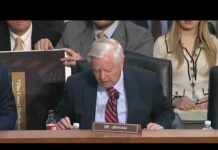
Senator Mike Lee says the Senate has less than a month to decide whether proof-of-citizenship rules will shape the 2026 midterms, but a divided Congress and angry voters on both sides now see the fight as one more sign that Washington is failing them.
Story Snapshot
- The SAVE America Act would require proof of citizenship to register and photo ID to vote in federal elections.
- The House passed the bill, but tangled Senate rules and GOP infighting now threaten to stall it past the midterm deadline.
- Supporters say the bill protects citizen-only voting; critics warn it could block millions of eligible Americans from the polls.
- The clash feeds a growing belief that Washington elites use election rules to protect power, not to serve voters.
What the SAVE America Act Would Do to Federal Elections
The SAVE America Act is President Trump’s top election bill and Senator Mike Lee is its main sponsor in the Senate. The bill’s core idea is simple: only United States citizens can vote in federal elections, and everyone must prove that before they register and show photo identification when they cast a ballot. The White House describes it as a way to make voting “easy” but cheating “hard,” and says “American citizens — and only American citizens — should decide American elections.” Supporters argue this is basic common sense, not a radical new rule.
Under the House-passed version, new voters would have to show documents like a passport, birth certificate, or certain state or tribal identification to prove citizenship. Senator Lee and allies stress that the list is broad and even includes an option to sign a sworn statement if someone’s papers were lost, shifting the burden to the state to verify status. Fourteen states already use some form of proof-of-citizenship rule, so backers say there is a clear state-level model that the federal government can follow. They argue that tightening rules now will stop any risk of non‑citizen voting before it spreads.
Why Mike Lee Says August 8 Is a Hard Deadline
Senator Lee has warned fellow Republicans that letting the SAVE America Act fail, or simply run out of time, would be “suicidal” politically. He pushed the bill through a marathon Senate debate and forced votes that showed it could reach 50 senators in support, but not the 60 votes needed to beat a filibuster. A key plan to pass the bill with only a simple majority collapsed when the Senate parliamentarian said it could not be added to a budget package under the special reconciliation process. That ruling closed off the easiest path and turned the calendar into the main enemy.
Lee now tells conservatives that the Senate must finish work by August 8 if they want new rules in place for the 2026 midterm elections. Election officials say major changes to registration and identification rules need time to roll out before voting begins, or they risk chaos at the polls. Another failed push in June, where an amendment tying the SAVE America Act to other legislation lost 48–50, showed how fragile support remains even inside the Republican Party. Three Republican senators, including Mitch McConnell and Thom Tillis, voted no and signaled they do not feel pressure from the voters who would live under the new rules.
Supporters See Integrity; Critics See Mass Disenfranchisement
Backers of the bill frame it as a simple trust‑but‑verify step that protects the value of every lawful vote. They say requiring proof of citizenship and photo identification will restore faith in elections at a time when many Americans think “the system is rigged.” Senator Lee insists the bill does not suppress honest voters and points to polls claiming 70 to 80 percent of the public support stronger identification rules across party lines. For many conservatives, the focus on stopping non‑citizen voting also ties into broader anger about illegal immigration and a sense that Washington has ignored the border for years.
Civil rights groups, voting advocates, and several Democratic senators paint a very different picture. They warn the SAVE America Act is “the worst voter disenfranchisement effort in decades” and could block “millions” of eligible Americans from the polls. Policy analyses argue that forcing in‑person proof for mail, online, or motor‑vehicle office registrations would strip away the most convenient sign‑up methods. Research on proof‑of‑citizenship laws shows that many registered voters do not have ready access to a passport or original birth certificate, and that gathering documents can be costly and slow, especially for low‑income, elderly, or rural citizens. To critics, the bill adds red tape in the name of fighting a problem they say is rare.
A Fight Over Fraud With Little Public Data
One striking gap in this debate is the lack of hard numbers. Supporters of the SAVE America Act often cite “10 to 20 million” illegal immigrants living in the country and repeat stories of non‑citizens being arrested for voting, but they do not point to nationwide Department of Justice data or detailed court records showing a broad pattern of non‑citizen voting. Non‑citizen voting is already a crime under federal law, and major studies find that confirmed cases are very rare compared with the total number of votes cast. Even some right‑leaning analysts admit they need clearer statistics to back up the fraud claims that drive the bill.
WATCH: Mike Lee Warns Senate Must Pass SAVE America Act by August 8, or We Won't Have It for Midterms https://t.co/oZmOAFUJrm #gatewaypundit via @gatewaypundit
— Debra Dosch (@DebraDosch) July 12, 2026
Opponents, on the other hand, use strong language about “Jim Crow tactics” and say the Act would disenfranchise “millions,” but they often rely on broad estimates and past studies of strict voter identification laws rather than fresh, detailed counts tied directly to the SAVE America proposal. Few of their public statements walk through exactly how many Americans lack the specific documents listed in the bill or how many would be blocked on Election Day by new purge rules. This leaves voters stuck between two fear‑based stories: one about shadowy non‑citizen fraud, and another about mass suppression, without the full evidence needed to judge who is right.
Deeper Frustration With a System Seen as Rigged
For many Americans, the real story here is not only about documents and deadlines. It is about trust in government. Older conservatives, who have watched woke agendas, soaring debt, and weak border enforcement, see the SAVE America Act as a test of whether Washington will finally put citizens first and clean up elections. Older liberals, angered by deportations, cuts to social programs, and a growing gap between rich and poor, see the bill as one more effort to make it harder for struggling people to vote at all. Both sides feel that powerful insiders use the rules to protect themselves.
The messy path of the bill adds to that belief. House leaders passed it with a simple majority, but then used it as leverage in fights over housing and other laws. The White House has tied progress on unrelated bills to action on the SAVE America Act, and critics say Trump even “blew up” a bipartisan housing deal to force the Senate’s hand. Senate leaders, meanwhile, pivoted away from the bill after long debate, and some Republicans publicly dismissed it as not worth changing filibuster rules. To many voters, this looks less like a serious effort to solve a clear problem and more like another example of politicians gaming procedures while working Americans watch from the sidelines.
Sources:
thegatewaypundit.com, usatoday.com, foxnews.com, americanprogress.org, democracydocket.com, facebook.com, rules.house.gov, npr.org, whitehouse.gov, kaine.senate.gov, nul.org, brennancenter.org, nonprofitvote.org, issueone.org, campaignlegal.org, ballotpedia.org, mapresearch.org, bipartisanpolicy.org
© prospernews.net 2026. All rights reserved.