

(ProsperNews.net) – Virginia voters are hours away from deciding whether politicians in Richmond can temporarily rewrite the state’s congressional map in a way that could lock in a 10–1 Democratic advantage.
Quick Take
- A special statewide vote on April 21 will decide a constitutional amendment tied to a pre-approved congressional map passed earlier this year.
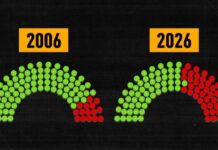
- Virginia currently sends 6 Democrats and 5 Republicans to the U.S. House; analysts say the proposed map would likely shift the balance to 10 Democrats and 1 Republican.
- Supporters call it a temporary “fairness” response to national redistricting battles; opponents call it a blunt partisan power grab.
- More than 1.3 million early votes were cast, and polling has shown a razor-thin contest heading into Election Day.
What Virginians Vote On Tuesday—and Why It’s So High Stakes
Virginia’s April 21 special election asks voters to approve a constitutional amendment that would temporarily shift congressional redistricting authority back toward the General Assembly through 2030. The practical effect is straightforward: if voters say yes, a map already passed by the Democrat-controlled legislature and signed by Gov. Abigail Spanberger would take effect for upcoming federal elections. If voters say no, the current districts stay in place.
The reason conservatives are paying attention is the size of the potential swing. Virginia now has 11 congressional seats split 6–5, with Republicans holding five. Under the proposed lines, prior election results suggest Democrats could be favored in 10 seats, leaving Republicans competitive in only one. That kind of engineered imbalance is exactly what many voters thought Virginia’s post-2020 reforms were supposed to prevent.
How Virginia Got Here: A “Temporary” Fix That Breaks the Original Reform
Virginia moved toward a bipartisan commission model after 2020, reflecting broad public fatigue with politicians picking their voters. The new amendment would effectively suspend that approach until October 31, 2030, after which the state would revert to the commission framework tied to the post-2030 census cycle. Supporters argue the sunset clause limits the damage. Critics respond that a “temporary” rule change still decides multiple election cycles.
The timeline has been messy, which matters because it highlights how aggressively both parties use process to get the outcome they want. A Virginia judge ruled in late January that the amendment was unlawful and blocked it from the ballot, but the Virginia Supreme Court later allowed the referendum to proceed. Another court action in early March confirmed the election could happen, while leaving room for legal fights after the vote—meaning the political uncertainty may not end Tuesday night.
“Fighting Fire With Fire” vs. “Power Grab”: The Competing Arguments
Democratic advocates have framed the referendum as a defensive move—“fighting fire with fire”—arguing other states have redrawn maps in ways that would benefit Republicans heading into the 2026 midterms. That pitch is designed to sound like self-preservation rather than domination. But the core policy choice remains: should a legislature be allowed to swap in a map that heavily advantages one party, even if leaders promise it’s just for a limited window?
Republicans, meanwhile, have argued the amendment is less about fairness than about guaranteeing outcomes—an approach that can make elections feel pre-decided. The stated concern is not simply who wins a seat or two, but whether voters will still believe representation is earned. When mapmakers can choose boundaries that all but pre-select winners, faith in the system drops—and it fuels the broader bipartisan suspicion that insiders protect themselves first while ordinary families deal with higher costs and a distracted government.
Turnout, Tight Polls, and the Immediate National Fallout
As of election eve, campaigns are treating this like a full-scale statewide showdown. Reports indicate more than 1.3 million early ballots were cast during the early-voting window that ran from March 6 to April 18. Polling has been narrow and inconsistent, with surveys showing the “yes” side anywhere from the mid-40s to low-50s—basically a coin flip in a high-salience vote where persuasion and turnout matter more than party labels.
If the amendment passes, the new map would shape the 2026, 2028, and 2030 House elections, potentially affecting the balance of power in Washington. If it fails, Virginia remains on its current map while redistricting battles rage elsewhere. Either way, the deeper lesson is uncomfortable: the modern fight is less about persuading voters on policy, and more about controlling the rules that decide who counts as a “winnable” voter in the first place.
Virginia’s political future could be completely reshaped in tomorrow's redistricting referendum.
The proposed redraw could turn 4 red districts blue — leaving only ONE Republican district in the entire state, if approved by voters.
The Stakes:
• Current Map: 6 Democrat vs. 5… pic.twitter.com/qSV8CIe7xc
— Fox News (@FoxNews) April 20, 2026
For conservatives who want limited government and accountable representation, the referendum is a reminder that process questions are policy questions. For liberals who fear being permanently outmaneuvered in other states, it’s a test of whether “fairness” can justify hardball tactics at home. Virginia’s vote won’t end gerrymandering nationwide, but it will signal whether voters accept partisan mapmaking as the new normal—or demand that both parties step back from a politics that feels increasingly rigged.
Sources:
Arlington Democrats — Redistricting
Virginia Department of Elections — Proposed Amendment for April 2026 Special Election
Wikipedia — 2026 Virginia redistricting amendment
Copyright 2026, ProsperNews.net