

(ProsperNews.net) – ISIS Claims Devastating Church Bombing in Damascus, Killing 27 Christians in Worst Attack Since Assad’s Fall
Key Takeaways
- A suicide bomber attacked the Greek Orthodox Mar Elias Church in Damascus on June 22, 2025, killing at least 27 people and injuring 63 others
- The Islamic State (ISIS) has been identified as responsible by Syria’s Interior Ministry, marking their first major attack in Damascus since the fall of the Assad regime
- The attacker opened fire on worshippers before detonating an explosive vest, causing extensive damage during evening prayers
- The death toll steadily increased from initial reports of 19-20 to 27 as more victims succumbed to injuries
- President Ahmad al-Sharaa condemned the attack as a “heinous crime,” highlighting ongoing security challenges in post-Assad Syria
Deadly Attack Targets Christian Worshippers
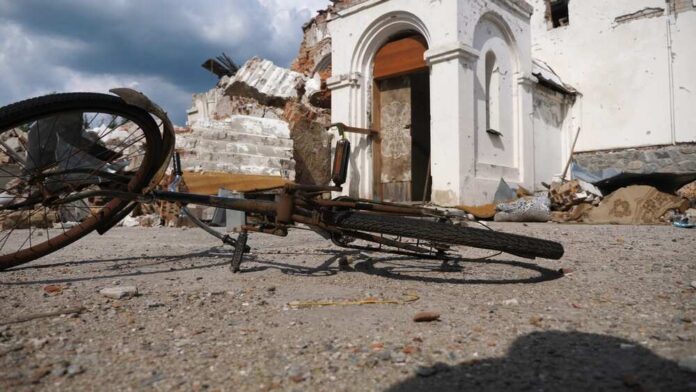
A devastating suicide bombing ripped through the Greek Orthodox Mar Elias Church in Damascus’ Dweila district on June 22, 2025, killing at least 27 people and wounding 63 others. The attack, which occurred during evening prayers, represents one of the deadliest assaults on Syria’s Christian community in over a decade. According to Syrian officials, a masked attacker entered the church, opened fire indiscriminately on worshippers, and then detonated an explosive vest, causing catastrophic damage to the historic church building and leaving a scene of carnage.
The bombing has sent shockwaves through Syria’s already vulnerable Christian minority population, which has faced increasing persecution since the fall of the Assad regime. Eyewitness accounts describe scenes of horror as the peaceful worship service transformed into chaos. “I heard gunshots and screaming, then a massive explosion that shook the entire building,” said one survivor who was treated for shrapnel wounds. “There were bodies everywhere, people crying for help. The pews were shattered, and there was blood on the walls.”
ISIS Resurges as Security Threat
Syria’s Interior Ministry has officially blamed the Islamic State (ISIS) for the attack, identifying it as the work of a sleeper cell that has remained dormant since the fall of Bashar al-Assad’s government. This marks the first major ISIS operation in Damascus under the new Islamist-led government, raising serious questions about the administration’s ability to contain extremist threats. The terrorist organization’s targeting of a Christian church aligns with their historical pattern of sectarian violence and their stated goal of eliminating religious minorities from the region.
The attack exposes the failure of President Ahmad al-Sharaa’s government to effectively neutralize ISIS elements within Syria despite repeated assurances that the terrorist group had been contained. Security experts point to this bombing as evidence that ISIS maintains operational capabilities in the Syrian capital, contradicting government claims of improved security. The group’s ability to strike at a well-known church during a busy service demonstrates sophisticated planning and intelligence gathering that should alarm authorities.
Rising Death Toll and Aftermath
Initial reports on June 22 indicated approximately 19-20 fatalities, but the death toll steadily climbed as more victims succumbed to their injuries. By June 23, Syria’s Health Ministry confirmed 25 deaths, while the Syrian Observatory for Human Rights, an independent monitoring group, reported 27 fatalities and three unidentified body parts recovered from the scene. The discrepancy highlights the chaotic aftermath and the severity of injuries sustained by many victims.
“The suicide bomb killed 22 at the Orthodox church in Damascus,” reported Democracy Now, noting that “Syria’s Interior Ministry blamed the attack on ISIS.” The targeting of civilians during religious worship represents a particularly heinous violation of human dignity and religious freedom, reminiscent of ISIS tactics during their territorial control of parts of Syria and Iraq. The victims included men, women, and children who had gathered for peaceful worship, making this attack all the more reprehensible.
Government Response and Security Failures
President Ahmad al-Sharaa condemned the bombing as a “heinous crime” and pledged to apprehend all involved parties. However, his administration faces mounting criticism for security lapses that allowed such a devastating attack to occur in the capital. The bombing underscores persistent security threats in Syria despite the government’s repeated assurances of stability following Assad’s ouster. Critics point out that the current Islamist-led government has prioritized consolidating power over addressing the ISIS threat.
“A member of Islamic State opened fire… before blowing himself up,” reported Guardian News, highlighting the tactical approach used by the terrorist organization. This methodology suggests a well-planned operation rather than a lone-wolf attack, raising concerns about ISIS’s organizational structure remaining intact despite military defeats. The ability to execute such a complex attack in Damascus indicates serious intelligence failures by Syrian security services.
International Reaction and Christian Persecution
Governments across the Middle East have denounced the bombing, with particular emphasis on its targeting of religious minorities. However, these condemnations ring hollow to Syria’s Christian community, which has experienced increasing persecution since the political transition. The attack highlights the precarious position of Christians in the Middle East, where their populations have dwindled dramatically over the past two decades due to targeted violence, discrimination, and forced displacement.
A vigil held at the damaged Mar Elias Church drew hundreds of mourners, reflecting the deep communal trauma inflicted by the attack. Christian leaders have called for increased protection for their communities and places of worship, pointing to a pattern of neglect by authorities. This bombing represents not just a security failure but a failure to protect religious freedom in a region where Christians have lived for two millennia but now face existential threats from Islamic extremists.
Copyright 2025, ProsperNews.net